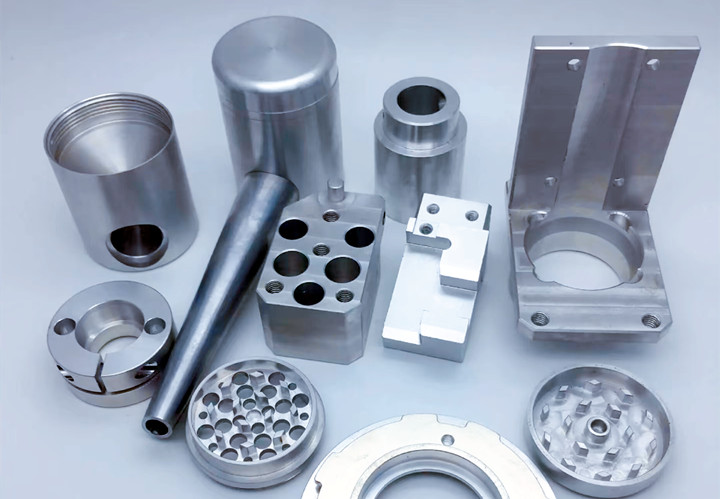
When deciding between CNC machining vs injection molding, manufacturers must carefully evaluate their project’s specific needs. Both processes offer unique advantages, but each excels in different areas depending on the product type, volume, and material used. CNC machining is renowned for its precision and versatility, making it ideal for complex designs and low-volume production. In contrast, injection molding is best suited for high-volume manufacturing, offering cost-efficiency and consistency in producing identical parts.
Choosing between CNC machining and injection molding can be a complex decision, as each has its strengths and limitations. CNC machining excels in creating highly detailed parts with complex geometries, offering flexibility in material selection and the ability to work with a wide range of metals and plastics. On the other hand, injection molding shines when large quantities of parts are needed quickly and at a lower per-unit cost. Understanding the specific requirements of your project—whether it’s precision, volume, or material considerations—will help you determine which process is the better fit. Let’s explore how these two manufacturing methods compare across various factors so that you can make an informed decision for your next project.
What Is CNC Machining?
CNC (Computer Numerical Control) machining is a manufacturing process that uses computer-controlled machines to produce precision parts and components. Unlike manual machining, which requires human operators to control tools, CNC machining uses pre-programmed computer software to guide the machine’s movements and operations. This technology enables highly accurate and repeatable production, making it ideal for creating complex and intricate designs.
The CNC machining process involves a variety of operations, such as drilling, milling, turning, and grinding, depending on the specific machine and part requirements. The machine reads the digital instructions provided by the design file (often in CAD/CAM format). It translates them into mechanical movements, which then cut, shape, or finish the raw material (usually metal, plastic, or composite) into the desired part. CNC Machining features:
- Precision
- Automation
- Flexibility
- Consistency
CNC machining offers exceptional precision, often achieving tolerances within micrometers, essential for applications requiring high accuracy. Once the program is set, CNC machines operate autonomously, reducing manual intervention and enhancing production speed. Their versatility allows them to work with various materials, including metals, plastics, and composites, while producing both simple and intricate designs. Additionally, CNC machines ensure consistent results across large production runs, guaranteeing that each part is nearly identical to the next.

What Is Injection Molding?
Injection molding is a manufacturing process used to produce parts by injecting molten material into a mold cavity. The material is typically plastic, though metals and other materials can also be used. The process begins by melting the raw material, which is then injected under high pressure into a pre-designed mold. Once the material cools and solidifies, the mold is opened, and the finished part is ejected. Injection Molding features:
- High Efficiency
- Complex Shapes
- Consistency
- Material Variety
Injection molding is highly efficient and capable of producing large quantities of parts quickly, making it ideal for high-volume production. It can create intricate and detailed shapes that may be difficult or costly to achieve through other methods. Once a mold is created, injection molding ensures consistent results, with each part being nearly identical. Additionally, while it is most commonly used with thermoplastics, the process can accommodate a variety of materials, including thermosets, elastomers, and even metal powders, offering versatility in production.

CNC Machining vs Injection Molding: Key Differences
While both CNC machining and injection molding are widely used manufacturing processes, they each offer distinct advantages depending on the specific requirements of a project. Understanding their key differences is essential when deciding which method to use for your production needs. Here’s a table that outlines the key differences between CNC machining and injection molding:
| Aspect | CNC Machining | Injection Molding |
| Production Volume | Ideal for low-to-medium volume production | Best for high-volume production, particularly for large quantities of identical parts. |
| Complexity and Precision | High precision with tight tolerances, suitable for complex geometries and custom designs. | Primarily uses thermoplastics but can also handle thermosets, elastomers, and metal powders. |
| Material Flexibility | Works with a wide range of materials, including metals, plastics, and composites. | Tolerances are typically less precise than CNC machining but can still achieve high consistency for mass production. |
| Lead Time & Setup Costs | Shorter lead time and lower setup costs, ideal for prototyping and small batches. | Higher initial setup costs (mold creation) but lower per-unit costs for large production runs. |
| Tooling and Flexibility | More adaptable to design changes during production. | Less flexible once the mold is created; changes are expensive and time-consuming. |
| Tolerances | Achieves extremely tight tolerances, often within micrometers, making it ideal for parts requiring high precision. | Tolerances are typically less precise than CNC machining, but can still achieve high consistency for mass production. |
| Ideal Applications | Prototyping, custom parts, low-volume runs, and parts with intricate designs. | Mass production of standardized parts with high consistency and speed. |
Production Volume
CNC machining is ideal for low-to-medium volume production, particularly when high precision is required for complex parts. On the other hand, injection molding excels in high-volume manufacturing, where large quantities of identical parts are needed quickly and cost-effectively. The high initial cost of creating molds for injection molding is offset by the ability to produce large quantities at a lower per-unit cost.
Complexity and Precision
CNC machining is highly precise, often achieving tolerances within micrometers, making it suitable for parts with intricate geometries and tight specifications. This method allows for greater flexibility in design changes and material choices. Injection molding can also produce complex shapes, but it is typically best suited for parts that are less intricate in design. Once a mold is created, however, the consistency and accuracy of injection molded parts remain unmatched in large production runs.
Material Flexibility
CNC machining can work with a variety of materials, including metals, plastics, and composites, allowing for a broader range of applications. It is especially valuable when working with materials that are difficult to mold. Injection molding, while primarily used with thermoplastics, can also accommodate other materials such as thermosets, elastomers, and even metal powders. However, its material options are typically more limited compared to CNC machining.
Lead Time and Setup Costs
CNC machining generally has a shorter lead time for setup and can be faster for low-volume production or prototyping. However, it can be more expensive for large batches. In contrast, while injection molding requires significant upfront investment in mold creation, it offers lower per-part costs when producing large volumes, making it more cost-effective for mass production.
Tooling and Flexibility
CNC machining requires fewer tools and can be more adaptable to design changes, especially when modifications are needed during production. Injection molding, once the mold is created, offers limited flexibility for design changes, as modifying the mold is both costly and time-consuming.
Tolerance
CNC machining is capable of achieving extremely tight tolerances, often within micrometers, making it ideal for parts that require high precision and accuracy. This is particularly beneficial for complex or custom parts. Injection molding, while offering good consistency and repeatability, generally achieves lower precision compared to CNC machining. However, it can still meet the tolerances required for most mass-production applications, especially for simpler parts.

Making Your Decision: CNC Machining vs Injection Molding
When deciding between CNC machining and injection molding, the primary factors to consider are production volume, design complexity, material requirements, and cost efficiency. CNC machining is ideal for low-to-medium volume production, prototyping, and custom parts. It excels when high precision, intricate designs, and material flexibility are required, as it can handle a variety of materials, including metals, plastics, and composites. CNC machining is also well-suited for applications that demand tight tolerances and high-quality finishes, such as aerospace components or medical devices. However, it can be more expensive for large-scale production due to higher per-part costs and longer lead times.
On the other hand, injection molding is the best choice for high-volume production of identical parts. While it has higher initial setup costs due to mold creation, injection molding offers cost-effective mass production with lower per-unit prices as production scales. It’s ideal for parts with simpler to moderately complex designs, where consistency and speed are paramount. Injection molding is typically used for producing large quantities of plastic parts, such as consumer goods, automotive components, and packaging, where uniformity is essential, and the production process is optimized for long runs.
How ACO Mold Can Help
ACO Mold provides comprehensive, high-quality manufacturing solutions specializing in injection molding services. We offer a one-stop solution for industries including consumer electronics, automotive, medical, and agriculture. Our services range from part drawings creation, reverse engineering, DFM/mold flow analysis, and mold design, to prototyping, custom injection mold manufacturing, and plastic injection molding.
We also offer additional value-added services such as painting, printing, lasering, ultrasonic welding, assembly, packing, and logistics to ensure your project is seamlessly managed from start to finish. With our advanced injection molding capabilities, we can produce high-quality, consistent parts at scale—whether you’re in need of small-batch prototypes or large-volume production.
ACO Mold is committed to providing tailored solutions that meet your specific production needs, ensuring efficiency and reliability every step of the way.

Conclusion
Choosing between CNC machining vs injection molding depends on your production needs. CNC machining is ideal for low-to-medium volume runs, high precision, and complex designs, making it perfect for prototypes and custom parts. Injection molding, on the other hand, excels in high-volume production, offering cost-effective solutions for large batches of identical parts. By considering factors like volume, complexity, and cost, you can determine which method best suits your project.
FAQs:
What are the differences between injection molding and blow molding?
Injection molding involves injecting molten material into a mold to create solid parts, while blow molding involves inflating hot plastic inside a mold to form hollow objects like bottles.
What are the differences between injection molding and thermoforming?
Injection molding involves injecting molten material into a mold to create solid, complex parts, while thermoforming involves heating a plastic sheet and molding it over a form to create simpler, shallow parts.
What are the differences between injection molding and compression molding?
Injection molding involves injecting molten material into a mold cavity to create parts, while compression molding involves placing a pre-measured amount of material into a heated mold, which is then compressed to form the part. Injection molding is typically faster and suited for high-precision, complex shapes, while compression molding is often used for larger, simpler parts and materials that require heat and pressure to cure, like rubber or thermosetting plastics.
What are the differences between injection molding and 3D printing?
Injection molding involves injecting molten material into a mold to create parts, which is ideal for high-volume production with consistent quality. 3D printing, on the other hand, builds parts layer by layer from digital models, making it ideal for low-volume, custom, or complex parts. Injection molding is faster and more cost-effective for large runs, while 3D printing offers greater design flexibility and is better suited for rapid prototyping or highly customized parts.