I. Introduction
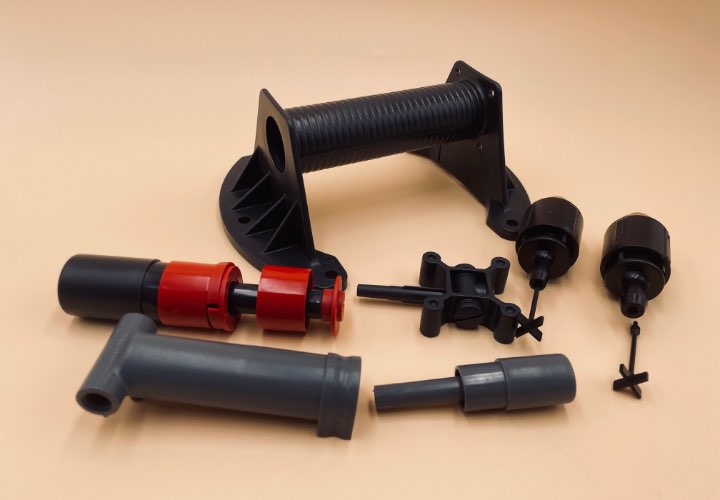
Polypropylene (PP) and ABS (Acrylonitrile Butadiene Styrene) are two of the most commonly used plastics in industrial applications, each offering unique properties that cater to different manufacturing needs. Polypropylene is lightweight, chemically resistant, and highly flexible, making it ideal for products like packaging, automotive components, and medical devices. ABS, on the other hand, is valued for its superior strength, impact resistance, and smooth surface finish, making it a popular choice for electronics, automotive interiors, and consumer goods.
Understanding the differences between these materials is essential for selecting the right one for your project. This article compares their key properties, performance characteristics, and industrial applications, providing practical insights to help you make informed decisions and optimize your production processes.
II. Material Properties: Polypropylene vs. ABS
When choosing the right material for your project, understanding the key properties of polypropylene (PP) and ABS (Acrylonitrile Butadiene Styrene) is essential. Both materials offer distinct advantages that make them suitable for specific applications across various industries.
(A) Polypropylene (PP) Properties
1. Lightweight, Cost-Effective, and Flexible
Polypropylene is one of the lightest thermoplastics, making it ideal for applications where weight reduction is important. It’s commonly used in packaging, automotive parts, and consumer goods, offering both cost-efficiency and flexibility. Its ability to bend and flex without losing shape also makes it suitable for components like hinges and containers.
2. Superior Chemical and Moisture Resistance
Known for its resistance to acids, bases, and organic solvents, polypropylene is perfect for industries like healthcare, food packaging, and chemical handling. Additionally, with low moisture absorption, it’s an excellent choice for applications exposed to humidity, such as medical devices and outdoor products.
3. Thermal Sensitivity
Polypropylene has a relatively low melting point of around 130°C (266°F), limiting its use in high-heat environments. However, this characteristic makes it ideal for general-purpose plastic molding in applications that don’t require high-temperature resistance.
(B) ABS (Acrylonitrile Butadiene Styrene) Properties
1. Impact Resistance, Rigidity, and Dimensional Stability
ABS is known for its excellent toughness and high impact resistance, making it a go-to material for products that need to withstand physical stress, such as automotive parts, electronic housings, and toys. Additionally, ABS maintains its shape and strength under stress, ensuring precision and consistency in molded parts. These combined properties make it ideal for high-precision applications where durability and accuracy are critical.
2. Aesthetic Appeal and Customization
One of ABS’s key features is its smooth, glossy surface, which is perfect for products where appearance matters. It’s easily customizable, paintable, and finishable, making it ideal for consumer-facing products like electronics, toys, and automotive components that require a polished look.
3. High Thermal Stability and Moderate Chemical Resistance
ABS can withstand higher temperatures than polypropylene, making it suitable for products exposed to heat, such as electronics and automotive components. Its increased thermal stability allows ABS to perform well in demanding environments. However, ABS’s chemical resistance is moderate compared to polypropylene, making it better suited for applications with minimal exposure to harsh chemicals.

III. Key Differences Between Polypropylene and ABS
While polypropylene (PP) and ABS (Acrylonitrile Butadiene Styrene) share some similarities, such as being widely used in manufacturing, they differ significantly in terms of their properties and suitability for various applications. Understanding these differences can help you choose the right material for your project.
Strength and Durability
ABS is known for its superior impact resistance, making it ideal for applications that require durability and toughness. It can withstand physical stress and harsh environments without cracking or breaking. In contrast, polypropylene is more flexible and has excellent fatigue resistance, but it doesn’t offer the same level of impact strength as ABS. Polypropylene is better suited for applications where lightness and flexibility are more important than rigidity.
Heat Resistance
ABS has a higher thermal stability compared to polypropylene, making it suitable for applications exposed to higher temperatures, such as in automotive interiors and electronic housings. ABS can typically handle temperatures up to 100°C (212°F) or higher. On the other hand, polypropylene has a lower melting point (~130°C or 266°F), which limits its use in high-heat environments but makes it more suitable for everyday applications that don’t experience extreme temperatures.
Chemical Resistance
When it comes to chemical resistance, polypropylene is the clear winner. It excels in resisting acids, bases, and many organic solvents, which makes it perfect for industries such as medical, chemical processing, and food packaging. ABS, while offering some chemical resistance, is not as robust in this regard. It is more prone to degradation when exposed to strong chemicals, making it less suitable for highly corrosive environments.
Aesthetic Quality
ABS is known for its smooth, glossy finish, making it a preferred choice for consumer-facing products where appearance is important, such as in electronics, toys, and automotive parts. It can also be easily painted or finished to achieve a desired look. Polypropylene, while versatile and functional, doesn’t offer the same level of finish quality as ABS. It has a more matte surface and is often used for products where appearance is secondary to functionality.
Cost and Manufacturing
In terms of cost, polypropylene is generally more affordable than ABS, making it a go-to option for large-scale production of lower-cost products. Its easier processing at lower temperatures also reduces energy costs during manufacturing. ABS, while more expensive, offers higher performance and durability, which can justify the cost for more demanding applications. The molding process for ABS also requires higher temperatures, resulting in increased energy consumption during production.
Here is a table to help you better understand it:
| Property | Polypropylene(pp) | ABS(Acrylonitrile Butadiene Styrene) |
| Strength and Durability | Flexible, excellent fatigue resistance, but lower impact strength. | High impact resistance, ideal for durable products. |
| Heat Resistance | Lower melting point (~130°C or 266°F), not suitable for high-heat environments. | Higher thermal stability, can withstand up to 100°C (212°F) or more. |
| Chemical Resistance | Excellent resistance to acids, bases, and organic solvents. | Moderate chemical resistance, less robust than PP. |
| Aesthetic Quality | Matte finish, less suitable for consumer-facing products. | Smooth, glossy finish, easy to paint and customize. |
| Cost and Manufacturing | More cost-effective, easier to process at lower temperatures. | More expensive, requires higher processing temperatures, but offers better performance. |
IV. Performance in Injection Molding: Polypropylene vs. ABS
When selecting materials for injection molding, understanding how polypropylene (PP) and ABS (Acrylonitrile Butadiene Styrene) perform during the molding process is crucial. Each material offers distinct advantages and challenges depending on the application.

(A) Polypropylene (PP) in Injection Molding
Polypropylene is known for its ease of processing in injection molding due to its low viscosity and relatively low melting point (~160°C to 170°C or 320°F to 338°F). This allows for faster molding cycles, which can improve production efficiency. However, its lower thermal stability compared to ABS can lead to issues such as warping or dimensional instability during cooling. Additionally, polypropylene has a higher tendency to shrink as it cools, which requires precise control over the mold design and cooling process to avoid defects. Despite these challenges, polypropylene is a cost-effective choice for large-scale production where high-volume manufacturing is necessary.
Advantages:
- Lower processing temperature and faster cycle times.
- Cost-effective for large-scale production.
- Less energy required for molding.
Challenges:
- Prone to warping and shrinkage.
- Requires careful mold and cooling system design to maintain precision.
(B) ABS (Acrylonitrile Butadiene Styrene) in Injection Molding
ABS requires higher processing temperatures (typically 200°C to 250°C or 392°F to 482°F), which can increase energy consumption and cycle times. However, ABS’s greater thermal stability during molding helps to maintain dimensional accuracy and reduces the risk of warping or shrinkage. The material’s excellent impact strength and rigidity also make it ideal for parts that require a high level of precision and structural integrity, such as automotive and electronic components. ABS’s superior flow characteristics in the melt phase also allow for detailed mold designs with sharp corners and thin walls, making it suitable for more intricate and complex parts.
Advantages:
- Superior dimensional stability and low risk of warping.
- Better performance in complex mold designs with detailed features.
- High-quality finish and aesthetic appeal.
Challenges:
- Higher processing temperatures and energy consumption.
- Longer molding cycle times compared to polypropylene.
V. Industrial Applications: Polypropylene vs. ABS
Both polypropylene (PP) and ABS (Acrylonitrile Butadiene Styrene) are widely used in various industrial applications, thanks to their distinct material properties. Understanding where each material excels can help manufacturers choose the right one for specific product needs, from consumer goods to automotive parts and medical devices.
(A) Polypropylene (PP) Applications
Polypropylene is a versatile, cost-effective material commonly used in industries where chemical resistance, flexibility, and moisture resistance are essential. Its lightweight nature and high resistance to corrosion make it ideal for:
Packaging: Widely used for containers, bottles, and caps, especially in the food and beverage industry due to its ability to resist moisture and chemicals.
Automotive: Utilized in the production of bumpers, battery cases, and interior components where lightweight and chemical resistance are important.
Medical Devices: Ideal for products such as syringes, medical containers, and diagnostic kits, as it can be sterilized and is resistant to chemical interactions.
Consumer Goods: Often found in products like toys, reusable containers, and outdoor furniture, thanks to its flexibility and cost-effectiveness.
Textiles: Common in the production of carpets, ropes, and non-woven fabrics.
Polypropylene’s ability to withstand harsh environments while remaining affordable makes it a go-to material for many everyday applications.

(B) ABS (Acrylonitrile Butadiene Styrene) Applications
ABS is favored in industries where impact resistance, aesthetic quality, and dimensional stability are crucial. Its strength, smooth finish, and ability to withstand higher temperatures make it ideal for:
Automotive: ABS is used extensively for interior components such as dashboards, trims, and bumpers, where high impact resistance and durability are required.
Electronics: Commonly used for electronics housings, such as for computers, televisions, and mobile devices, due to its ability to maintain shape and offer a smooth, glossy finish.
Consumer Goods: ABS is often used in durable products like luggage, toys, and kitchen appliances, where both toughness and appearance matter.
Pipes and Fittings: In the construction industry, ABS is used for plumbing pipes and fittings because of its excellent rigidity and ease of installation.
Medical Devices: Used for components that require both durability and aesthetic appeal, such as housings for medical equipment and devices.
ABS’s ability to retain its shape under stress, coupled with its high-quality finish, makes it ideal for consumer-facing and high-performance industrial applications.
VI. Conclusion
In conclusion, both Polypropylene vs. ABS have distinct properties that make them suitable for different industrial applications. Polypropylene is known for its chemical resistance, flexibility, and cost-effectiveness, making it ideal for industries like packaging, automotive, and consumer goods. On the other hand, ABS offers superior strength, impact resistance, and aesthetic appeal, which makes it a preferred choice for applications in electronics, automotive parts, and toys. Understanding the key differences between Polypropylene vs. ABS helps industries make informed material choices based on specific performance needs and cost considerations. For companies like ACO Mold, selecting the right material is essential to achieving optimal results in manufacturing and design.