In the fast-paced world of modern manufacturing, the demand for flexibility and precision is higher than ever. Low volume injection molding has emerged as a key solution for businesses that need high-quality parts without the commitment to mass production. Unlike traditional injection molding, which focuses on large quantities, low volume injection molding allows for smaller production runs—typically ranging from 100 to 100,000 parts—while maintaining the same level of precision and quality.
This process is ideal for companies looking to prototype new products, create custom components, or manufacture specialized parts on-demand. By utilizing low volume injection molding, manufacturers can reduce upfront costs, shorten lead times, and quickly respond to shifting market demands. Additionally, it offers flexibility for design or material changes without the risks associated with large-scale production.
As we dive deeper into low volume injection molding, it becomes clear that this approach provides a compelling combination of efficiency and adaptability, making it an excellent option for a wide range of industries. Let’s begin by exploring what exactly low volume injection molding involves and how it compares to traditional injection molding methods.
Why Need Low Volume Injection Molding?
Low volume injection molding offers businesses flexibility, cost-efficiency, and faster turnaround times. It’s well-suited for small production runs, prototyping, or custom parts where mass production isn’t required. This process reduces upfront tooling costs and allows for quick adjustments in design or materials. And making it ideal for testing products or targeting niche markets. Additionally, low volume molding shortens lead times, helping businesses get products to market faster without the need for large inventories. Overall, it provides a versatile and cost-effective solution for projects that demand precision and high-quality results in smaller quantities.
7 Steps for Low Volume Injection Molding
Low volume injection molding involves several precise steps to ensure high-quality parts in smaller production runs. Here’s a quick overview of the key steps involved in the process.

Step 1: Mold Design
Mold manufacturing at ACO Mold begins with precise design tailored to customer needs. Once the order is confirmed and 2D/3D part drawings or samples are received, ACO Mold’s project manager conducts a kick-off meeting with the design team to review all details. After discussing the Design for Manufacturing (DFM), the mold design begins and is delivered to the customer within 2-3 days, depending on complexity. Customer input on mold requirements is always welcome to ensure accuracy and satisfaction.
Step 2: Mold Manufacturing
Once the mold design is completed, it is sent to the customer for approval, which may involve 1-2 rounds of discussions depending on familiarity with injection molding. For contract molding projects, ACO Mold handle all details and ensure mold quality. Upon approval, we order the necessary steel, mold base, and accessories. A detailed process report is provided, and we offer weekly updates throughout the 3-6 week manufacturing process, depending on the mold’s size and complexity.
Step 3: Mold Assembly
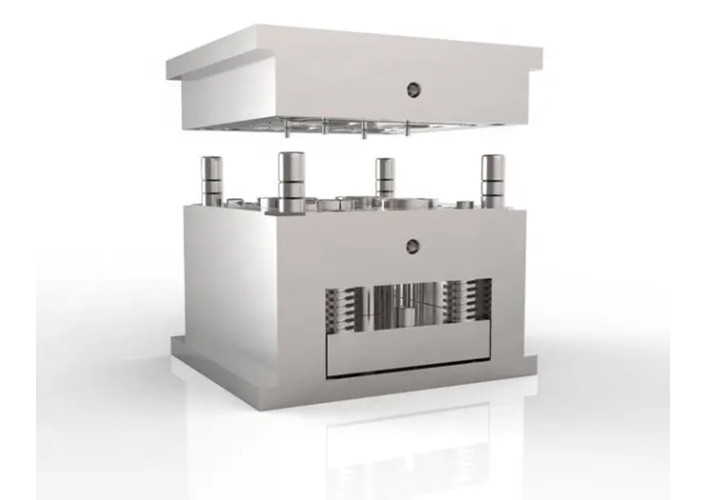
All mold components, including the core, cavity, and inserts, are carefully aligned and assembled. Proper assembly ensures a tight fit, preventing material leakage and ensuring accurate part dimensions. It also involves installing cooling systems and ejectors to facilitate efficient production and smooth part release.
Step 4: Mold Sampling
The assembled mold is tested by producing initial sample parts. This process helps identify any potential issues, such as defects in part design or mold performance, allowing for adjustments before full production. Mold sampling ensures that the final product meets quality standards and customer requirements.
Step 5: Injection Molding
Molten plastic material is injected into the mold cavity under high pressure. The material flows into all the detailed features of the mold, ensuring the part is accurately formed.
Step 6: Packing
If shipping by sea, special care is taken to vacuum pack the mold to prevent rust. The mold is then placed in a sturdy wooden box for protection. Packages include all necessary 2D/3D mold design drawings, NC programming data, copper components, spare parts, and interchangeable inserts.
Step 7: Shipping
Shipping is the final stage in low volume injection molding, where the mold and parts are carefully packaged and transported to the customer. Depending on the destination and customer requirements, shipping can be done by sea, air, or land.
Low Volume Injection Molding VS Traditional Injection Molding
Understanding the differences between low volume and traditional injection molding helps you select the best manufacturing process suited to your project’s needs, budget, and production requirements. Here’s a table to clearly distinguish between them:
| Items | Low Volume Injection Molding | Traditional Injection Molding |
| Production Scale | Ideal for small batches | Mass production |
| Tooling Cost | Lower cost | Higher cost |
| Lead & Setup Time | Shorter lead and setup time | Longer lead and setup time |
| Design Flexibility | High | Moderate |
| Sustainability and Environmental Impact | Generally more sustainable | Potential environmental impact |
| Waste Generation | Less waste | More waste |
| Maintenance and Repairs | Easier to maintain | Complex maintenance |
| Customization Possibilities | High | Limited |
Low volume injection molding offers several key advantages for manufacturers. One of the primary benefits is the use of softer aluminum tooling, which significantly reduces tooling costs while maintaining the precision required for high-quality parts. This process enables quality parts manufacturing at a lower overall cost, making it ideal for small production runs. With shorter lead times, manufacturers can quickly produce and deliver parts, speeding up the overall development cycle. The process also allows for flexibility in design, enabling easy modifications to materials or designs between production runs. Additionally, low volume injection molding serves as a bridge for scaling, offering a cost-effective way to test and validate designs before moving to mass production. This, combined with a faster time to market, makes it an attractive option for companies looking to stay competitive. Finally, it’s an environmentally friendly choice, as it reduces material waste and avoids overproduction, producing only what’s needed.

Low Volume Injection Molding Applications
Low volume injection molding offers versatility across a wide range of industries. From rapid prototyping to custom manufacturing, this process is ideal for companies requiring small-batch production with high precision. Here’s a look at some of the most common applications for low volume injection molding.
Rapid Prototyping
Rapid Prototyping allows companies to quickly produce functional prototypes that closely resemble the final product in terms of material, precision, and design. By using actual production-grade materials, this method ensures that prototypes are suitable for real-world testing and performance evaluation. It accelerates the product development process, providing valuable insights into product functionality and identifying potential design issues early on. Additionally, rapid prototyping with injection molding enables faster iterations, allowing for quick adjustments before moving to mass production. This approach ultimately reduces time to market and mitigates risks associated with full-scale manufacturing.
Short-Run Manufacturing
Short-run manufacturing with injection molding is ideal for producing limited quantities of high-quality parts, typically ranging from a few hundred to several thousand units. This approach is perfect for companies that need flexibility, whether for testing new products, creating niche items, or responding to seasonal demand. Short-run manufacturing offers the benefits of precision and efficiency while minimizing the costs and risks associated with mass production. By using injection molding, manufacturers can produce consistent, high-quality parts in small batches, allowing for quick adjustments in design and production. This method also reduces lead times, helping businesses respond rapidly to market changes.
Bridge Production
Bridge production serves as a crucial step between prototyping and mass production, allowing companies to produce small quantities of parts while preparing for full-scale manufacturing. This method helps meet immediate market demand without the long lead times of mass production, ensuring that products are available during the transition phase. Bridge production also enables manufacturers to test designs, refine manufacturing processes, and make necessary adjustments before committing to larger runs. By using injection molding for bridge production, businesses can achieve high-quality parts quickly and cost-effectively, minimizing the risks and costs associated with scaling up to mass production too early.
On-Demand or Custom Manufacturing
On-demand or custom manufacturing allows companies to produce parts as needed, rather than committing to large-scale production. This flexible approach is ideal for businesses requiring small batches of tailored or specialized components, such as custom-designed parts for specific applications. By using injection molding, manufacturers can ensure high-quality, precise parts that meet exact specifications while benefiting from faster turnaround times. On-demand manufacturing reduces inventory costs and waste, as companies only produce what is required, when it’s needed. It’s a cost-effective solution for industries that need rapid adjustments, personalization, or low-volume production to meet unique customer needs.
Extensive Experience Across Multiple Industries
ACO Mold brings extensive expertise in low volume injection molding across a wide range of industries, including medical and healthcare, where precision and quality are paramount. We also serve sectors like automotive accessories, agriculture and gardening, fittings and connectors, and lighting components. Additionally, we specialize in transparent parts and silicone rubber parts, ensuring top-quality solutions tailored to each industry’s unique requirements. Our experience allows us to deliver high-quality, custom solutions for various applications while maintaining flexibility and efficiency in production.
Why Work with ACO Mold?
Choosing the right partner for your injection molding needs is crucial. Here’s why ACO Mold stands out, offering expert services, flexible solutions, and a proven track record for quality and precision.
1. Blind Free Quotations for Every Project
ACO Mold offers transparent, blind-free quotations for your project within 24 hours, ensuring that every detail is clearly outlined. Our quotes include a comprehensive cost breakdown, covering all aspects of the project, from material and tooling costs to labor and production expenses. This transparency allows you to have a complete understanding of where your investment is going, empowering you to make informed decisions with confidence. By providing a detailed cost analysis, ACO Mold ensures there are no hidden fees or surprises, making it easier for you to manage your budget and choose the best options for your manufacturing needs.
2. Design for Manufacturing Support
At ACO Mold, we focus on simplifying, optimizing, and refining the product design of your project to ensure that it is not only manufacturable but also cost-effective. Our expert team works closely with you to identify potential design improvements that enhance both functionality and efficiency. By streamlining the design, we reduce complexity, which leads to a more seamless production process. Our goal is to minimize unnecessary costs without sacrificing quality, helping you achieve a superior product at a lower overall expense. With our design-for-manufacturing approach, we ensure that your project transitions smoothly from concept to production, delivering outstanding results while keeping costs under control.
3. Flexible and Customer Centered Services
Our team operates with flexibility to meet a wide range of customer requests and effectively solve any challenges that arise. Whether it’s handling extremely low-volume production demands, addressing urgent needs with quick turnaround, or accommodating new design changes, we are committed to providing responsive and adaptable solutions. We work closely with our customers to ensure that their unique requirements are met, ensuring smooth production and timely delivery, no matter the complexity of the project.
4. A Proven Track Record
Since 2000, ACO Mold has successfully assisted over 200 customers in bringing their products to life, earning us a reputation for excellence and a wealth of positive customer feedback. We take pride in the satisfaction of our clients and invite you to explore our customer feedback page to see their success stories and learn more about their experiences working with us!
Final Thought
In conclusion, low volume injection molding offers a unique combination of precision and flexibility, making it an ideal solution for businesses looking to produce high-quality parts without committing to large-scale production. Whether you’re prototyping, fulfilling custom orders, or bridging the gap to mass production, this method provides cost-effective, efficient, and adaptable manufacturing. With its ability to meet specific design requirements, reduce lead times, and quickly respond to market demands, low volume injection molding is a valuable tool for industries seeking reliable and scalable solutions. Partnering with an experienced manufacturer like ACO Mold ensures that your project achieves the highest standards of quality and efficiency.