——The Path to Becoming an Outstanding Injection Mold Designer in China
Introduction: The Value and Challenges of Injection Mold Design
In the era of automotive lightweighting and consumer electronics miniaturization, injection molds serve as the “industrial mother,” directly impacting manufacturing efficiency and product quality. According to data from the China Mold Industry Association, the injection mold market exceeded ¥300 billion in 2024, yet there remains a significant talent gap of 40% for high-end injection mold designers. Exceptional mold designers are not merely technical executors but pivotal bridges connecting product innovation with mass production. Their core value lies in cost reduction (e.g., 30% material savings through structural optimization), cycle time shortening (e.g., 40% reduction in trial mold periods via mold flow analysis), and enabling precision manufacturing for micro-medical devices. This article systematically outlines the growth trajectory from novice to industry expert, integrating practical experience with industry trends to provide actionable methodologies.
Career Development Stages and Skill Evolution
1. Foundational Stage (1–3 Years): Building Core Competencies
- Core Tasks: Master UG/NX and AutoCAD for 2D/3D modeling, grasp fundamental concepts like parting surfaces and gating systems.
- Key Milestones: A junior injecton mold designer improved 2D drawing approval rates from 35% to 92% within three months by systematically analyzing design errors flagged by senior engineers.
- Pitfalls to Avoid: Blindly replicating templates without understanding underlying principles (e.g., draft angle relationships with material shrinkage).
2. Intermediate Stage (4–6 Years): Refining Expertise
- Skill Advancements: Independently design complex molds (e.g., multi-cavity automotive bumpers) and apply Moldflow for optimizing gate placement.
- Case Study: By adjusting gate location through flow analysis, a PP product’s sink marks reduced by 70%.
- Collaborative Growth: Participate in cross-functional DFM meetings, using 3D-printed prototypes to validate manufacturability.
3. Advanced Stage (7+ Years): Leading Innovation
- Strategic Impact: Develop tailored solutions (e.g., conformal cooling molds for EV battery covers) and drive industry-wide advancements.
- Innovation Example: A team integrating AI-driven parametric design tools boosted standard part efficiency by 50%, earning recognition as a “Guangdong Smart Manufacturing Model Project.”
- Leadership Transition: Establish design knowledge repositories and train junior engineers through standardized manuals.

Four Core Competency Frameworks
1. Technical Expertise: From Materials to Processes
- Material Science: Understand shrinkage rates (ABS: 0.5%, PC: 0.02%) and select appropriate mold steels (e.g., P20 for general use, H13 for high-temperature applications).
- Process Optimization: Use DOE experiments to refine parameters (e.g., PA66’s holding time optimized from 15s to 18s, reducing shrinkage by 40%).
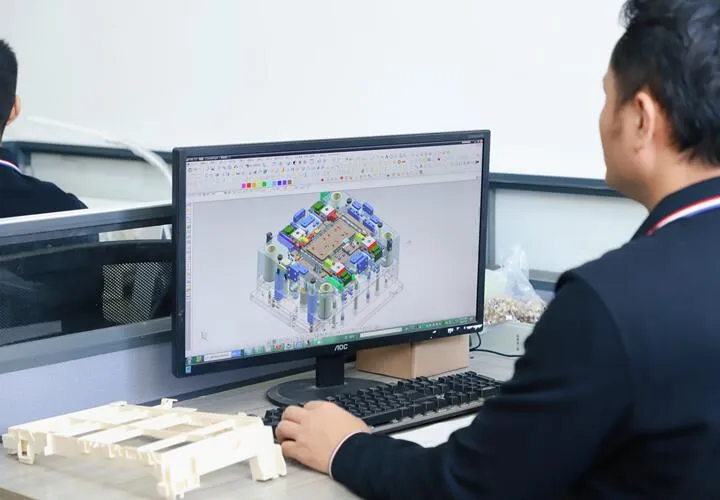
- Software Integration: Combine UG for modeling, Moldflow for flow simulation, and ANSYS for structural analysis.
2. Problem-Solving Agility: From Reactive Fixes to Proactive Prevention
- Root Cause Analysis: Implement a “5Why” framework—e.g., tracing flash defects to parting surface roughness (Ra >3.2μm) resolved via polishing.
- Risk Mitigation: Apply FMEA to preempt design flaws, avoiding 3 potential sink mark issues in one project.
3. Industry Insight: Bridging Technology and Trends
- Emerging Technologies: Adopt 3D-printed conformal cooling channels, improving cooling efficiency by 35%.
- Global Standards: Align with VDI 3341 for international mold design compliance, enhancing export competitiveness.
4. Collaborative Leadership: From Solo Execution to Team Empowerment
- Cross-Department Communication: Translate technical jargon for production teams (e.g., explaining slider mechanics via animations).
- Knowledge Transfer: Build a “failure case library” documenting defects (e.g., air entrapment) and solutions, shortening onboarding by 40%.
Practical Growth Pathways and Resource Integration
1. Learning Ecosystem
- Foundations: Study classics like Injection Mold Design Handbook (Zhang Weihé) and internalize industry standards (DME/HASCO).
- Advanced Training: Complete UG-certified courses and tackle 20+ real-world case studies.
- Industry Engagement: Attend CHINAPLAS to explore cutting-edge equipment and processes.
2. Project Experience Strategies
- Case Categorization: Organize molds by industry (automotive/electronics/medical), highlighting success factors and failures.
- Retrospective Analysis: Host weekly “problem workshops” using 5W1H to dissect defects (e.g., slider jamming due to inadequate lubrication).
3. Network Expansion
- Professional Communities: Join the China Mold Industry Association for technical forums and trend updates.
- Cross-Industry Collaboration: Partner with material suppliers (e.g., SABIC) and OEMs (e.g., DMG MORI) on R&D projects.
Adapting to Industry Transformations
1. Digital Revolution
- Smart Design: Deploy AI tools for automated runner system generation, cutting design time by 50%.
- Virtual Prototyping: Use VR to pre-validate mold assembly, reducing on-site debugging by 50%.
2. Sustainable Practices
- Eco-Design: Implement detachable mold bases for 30% longer service life and 25% lower repair costs.
- Circular Economy: Promote water-based release agents, cutting VOC emissions by 30%.
3. Globalization Imperatives
- Standard Harmonization: Adopt ASME Y14.5 for international drawings.
- Cultural Adaptation: Meet Japanese clients’ Ra ≤0.05μm requirements via ion nitriding surface treatments.
Case Studies in Excellence

Case 1: EV Battery Cover Mold Design
- Challenge: Minimize sink marks in 1.5mm-thick walls.
- Solution:
- Integrate hot runner systems to reduce weld lines.
- Design spiral cooling channels for uniform heat dissipation.
- Validate via Moldflow simulations.
- Outcome: Yield improved from 72% to 98%, earning “Guangdong High-Tech Product” certification.
Case 2: Medical Catheter Mold Development
- Challenge: Achieve 0.01mm surface precision.
- Innovation:
- Custom Haas tooling for micron-level machining.
- Ion nitriding to enhance surface finish.
- Impact: Broke foreign monopolies, reducing costs by 40%.
Conclusion: From Craftsman to Visionary
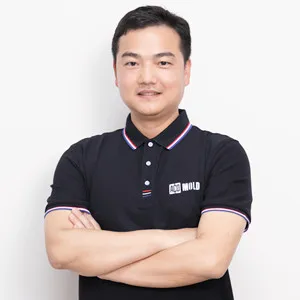
The journey from novice to master injection mold designer is a continuous ascent. Beginners lay technical foundations, intermediates refine problem-solving, and veterans lead industry innovation. Amid digitalization, sustainability, and globalization, designers must embrace lifelong learning, transforming experience into standardized processes and nurturing future talent. As Mr. Wu Chengqiang, a veteran injection mold designer, reflects: “Every mold is an engineer’s medal, but sustained excellence is the true passport to greatness.” With AI and smart manufacturing reshaping the landscape, the next era promises even greater frontiers for those who blend technical mastery with visionary thinking.
References
- Wu Chengqiang’s Career Journey: From Technician to Design Lead
- Professional Promotion Pathways for Injection Mold Engineers
- Zhang Shaofei: 30 Years of Craftsmanship and Innovation
- 2025 Mold Flow Analysis Certification Standards
- Competency Framework for Injection Mold Designers