Updated on June 30, 2025
Introduction
Driven by industrial 4.0 and the global push for carbon neutrality, engineering plastics molded parts are emerging as pivotal components in modern manufacturing. Renowned for their lightweight, corrosion resistance, and precision, these parts are progressively replacing metals and ceramics across industries such as automotive, electronics, and aerospace. This article systematically explores the definition, material selection, processing technologies, and future trends of engineering plastics molded parts, offering technical insights for industry professionals.
1. Definition of Engineering Plastics Molded Parts
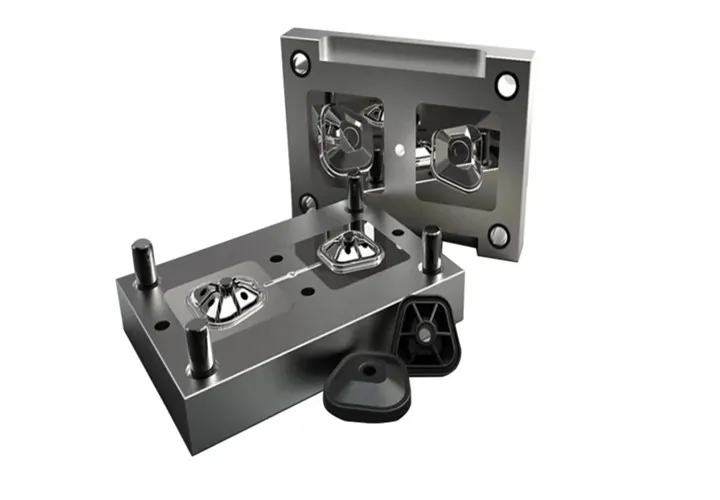
Engineering plastics molded parts refer to industrial components fabricated through processes like injection molding, extrusion, or blow molding, using high-performance polymers. Their core characteristics include:
- Substitution Advantage: Replacing metals and ceramics to reduce weight and cost (e.g., PA gears in automotive applications reduce weight by 30%).
- Functional Versatility: Enhanced through modifications (e.g., flame-retardant ABS for electronics enclosures).
- Precision Engineering: Capable of micro-scale accuracy (e.g., 5G antenna housings with ±0.1mm tolerances).
2. Common Engineering Plastics
Engineering plastics are categorized into general-purpose and specialty types:
| Category | Representative Materials | Key Properties | Typical Applications |
|---|---|---|---|
| General-Purpose | Nylon (PA) | High wear resistance, fatigue resistance | Automotive gears, bearings |
| Polycarbonate (PC) | High transparency, impact resistance | Optical lenses, bulletproof glass | |
| Polyoxymethylene (POM) | High rigidity, low friction | Precision gears, safety belt buckles | |
| Specialty | Polyether Ether Ketone (PEEK) | High heat resistance (250°C+), biocompatibility | Artificial joints, rocket nozzles |
| Polyimide (PI) | Radiation resistance, ultra-high temperature | Aerospace insulation, flexible circuits | |
| Liquid Crystal Polymer (LCP) | High-frequency dielectricity, low moisture | 5G antennas, high-frequency connectors |
Data Source: Industrial material databases and technical reports.
3. Material Selection for Engineering Plastics Molded Parts
Material choice hinges on performance, cost, and process compatibility:
- Performance-Driven Selection
- Heat Resistance: PEEK (>250°C) > PPS (220°C) > PA (120°C) for high-temperature environments.
- Chemical Stability: PTFE (polytetrafluoroethylene) withstands acids/alkalis, ideal for chemical piping.
- Electrical Insulation: PPS and PEEK in high-voltage casings (dielectric strength >20 kV/mm).
- Process Compatibility
- Injection Molding: Requires high flowability (e.g., ABS with MFI 10–20 g/10min).
- Extrusion: Demands high melt strength (e.g., PVC with heat deflection temperature of 80°C).
- Economic Considerations
- General plastics (e.g., PP) cost 10–20/kg,whilespecialtieslikePEEKexceed1,000/kg.
4. Molding Technologies and Techniques
A comparative overview of mainstream processes:
| Process | Principle | Materials | Precision | Case Study |
|---|---|---|---|---|
| Injection Molding | Molten plastic injected into molds under pressure | PA, PC, ABS | ±0.1mm | Smartphone casings, automotive bumpers |
| Extrusion | Continuous plastic extrusion | PVC, PE | ±0.5mm | Pipes, sheets |
| Blow Molding | Air pressure inflates parison into molds | PET, HDPE | ±1mm | Beverage bottles, fuel tanks |
| Nano Molding (NMT) | Metal surface nano-roughened for plastic bonding | PEEK + Stainless | Micron-scale | 5G phone frames |
Emerging Trends:
- Green Manufacturing: Low-temperature molding (25% energy reduction) and biodegradable materials (e.g., PLA).
- Smart Integration: Digital twin technology optimizes mold design, cutting development cycles by 50%.
5. Applications Across Industries

- Automotive
- Functional Components: PA6+30% glass fiber gears replacing metals, reducing weight by 30%.
- Lightweight Solutions: BMW i3 chassis uses carbon fiber-reinforced PA, cutting weight by 40%.
- Electronics
- Enclosures: Flame-retardant ABS (UL94 V-0) for laptops.
- Precision Parts: PBT connectors (0.4mm pitch) in smartphone motherboards.
- Medical & Aerospace
- Implants: Biocompatible PEEK joint replacements.
- Aerospace Components: PEI satellite brackets operating at -269°C to 400°C.
6. Competitive Advantages
- Performance Superiority
- Lightweight: Density 0.9–1.5 g/cm³, 30–50% lighter than metals.
- Corrosion Resistance: PTFE outlasts metals in harsh chemical environments by 10×.
- Economic Efficiency
- High Output: Injection cycles as short as 10–30 seconds per part.
- Design Freedom: Enables complex geometries (e.g., conformal cooling channels).
- Environmental Benefits
- Recyclability: PET bottle recycling rates exceed 90%, reducing oil dependency.
7. Conclusion
Engineering plastics molded parts are revolutionizing manufacturing by merging performance with sustainability. Future advancements—such as 4D-printed self-healing materials and hybrid metal-plastic additive manufacturing—promise smarter, lighter, and greener solutions. As industries prioritize carbon neutrality and digital transformation, these components will remain at the forefront of innovation.
References
- Overview of Engineering Plastic Applications Courseware. Humanities Library, 2024.
- DuPont Engineering Plastics Technical Whitepaper. 2025.
- Engineering Plastics in Automotive Lightweighting. China Plastic Processing Association, 2023.
- Principles of Polymer Processing. Mechanical Industry Press, 2022.
The following is the original text, published on July 14, 2017
What is engineering plastic molded parts?
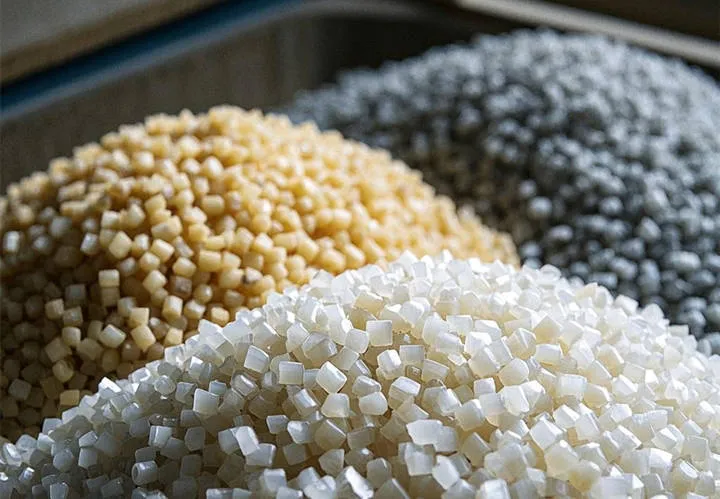
Engineering plastic molded parts are made of engineering plastics, through injection molding process, the engineering plastics, such as ABS, PC, POM, are molded into parts with desired shape and measurement. Parts made of engineering plastics have better mechanical and thermal properties, it can be used as a replacement of metal in many applications, for example, plastic auto parts, medical parts, electronic parts, household parts etc.
List of engineering plastic widely used:
ABS
Nylon
PA
PBT
PC
PET
POM
PPS
Application of engineering plastic molded parts:
Auto parts such car bumpers, back-seats, handles etc
Medical device
Electronic parts
Household parts
Agricultural
…
Why use engineering plastic parts?
If you look around, you will find there are many things are used to be made of metal now replaced by engineering plastic, custom molded parts made of engineering plastic have similar properties with metal such as strength, hardness, impact resistance, corrosion resistance, only they are even lighter or cheaper. You will see the engineering plastic molded parts are increasingly used to replace expensive or heavier metal parts.
How to make engineering plastic molded parts?
Engineering plastic molded parts required firstly part design, then you need a mold making company to fabricate an injection mold, at the end, you need an injection molder to mold it. To achieve a good result, it is important to make sure that both the mold maker and molder understand the property of the engineering plastic. Unlike other ordinary plastic parts, the parts made of engineering plastic are supposed to be applicable on many aspects besides dimension or appearance; you need to do some test to make sure there are functional.