I. Introduction
In modern manufacturing, the injection molding process is widely used due to its high efficiency and ability to mass-produce complex-shaped products. However, ensuring high precision and consistency of injection-molded products and achieving the best injection molding tolerances are crucial. Injection molding tolerances not only affect the appearance and assembly performance of the products but also directly relate to the quality and cost of the products. A carefully designed and strictly controlled injection-molded product can meet various strict application requirements and enhance the market competitiveness of the product. This article aims to explore the design techniques for achieving the best injection molding tolerances and provide valuable references for practitioners in the injection molding industry.
II. Basic Concepts of Injection Molding Tolerances
(A) Definition and Range of Injection Molding Tolerance
Injection molding tolerances refer to the allowable deviation range of injection-molded products in terms of size, shape, and position. It is usually expressed as positive and negative values, such as ±0.1mm. The range of injection molding tolerances depends on the functional requirements of the product, the operating environment, and the manufacturing process capabilities. Common tolerance standards and specifications include international standards (such as ISO), industry standards, and enterprise internal standards. Dimensional tolerances, guided by standards like DIN 16901 and ISO 20457:2018, are crucial for ensuring measurement accuracy and can significantly impact manufacturing costs and part accuracy.
(B) Factors Affecting Injection Molding Tolerances
- Characteristics of Plastic Materials
- Characteristics of Plastic Materials
Different plastics have different shrinkage rates and fluid. Selecting the appropriate injection molding material is crucial as different materials exhibit different shrinkage rates upon cooling, which significantly impacts the final product’s accuracy and quality. For example, crystalline plastics such as polyethylene (PE) and polypropylene (PP) typically have larger shrinkage rates, while amorphous plastics such as polystyrene (PS) and polycarbonate (PC) have relatively smaller shrinkage rates. The fluidity of the plastic also affects the uniformity of mold filling, thereby influencing the dimensional accuracy of the product.
- Performance and Parameters of Injection Molding Machines
Parameters such as injection pressure, injection speed, plasticizing capacity, and clamping force of the injection molding machine directly affect the filling and holding processes of the plastic. If the injection pressure is insufficient or the injection speed is uneven, it may lead to issues such as short shots, flash, or inconsistent product dimensions.
- Design and Manufacturing Accuracy of Molds
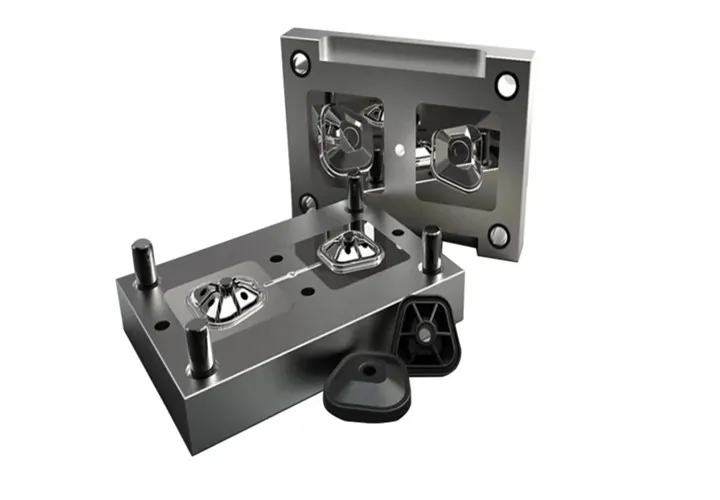
The structural design of the mold, the accuracy of the parting surface, the dimensional accuracy of the cavity and core, and the wear degree of the mold all have significant impacts on injection molding tolerances. High-precision molds can produce products that better meet tolerance requirements.
III. The Impact of Mold Design on Injection Molding Tolerances
(A) Mold Structure Design
- Selection and Design of the Parting Surface
The position and shape of the parting surface should be selected at the maximum contour of the product’’s shape and should be as simple and straight as possible to facilitate mold processing and product demolding. The accuracy of the parting surface directly affects the size of the flash and the dimensional accuracy of the product. Accurate design and material selection in the injection mold are crucial for achieving tight tolerances, preventing defects, and ensuring product quality.
- Layout of the Cavity and Core
The layout of the cavity and core should consider the flow balance of the plastic to ensure uniform filling of all parts of the product. If the flow is unbalanced, it may cause overfilling or underfilling in certain parts of the product, thereby affecting the dimensional accuracy.
(B) Selection of Mold Materials
- The Impact of Different Mold Materials on Tolerances
The hardness, wear resistance, and thermal expansion coefficient of mold materials affect the service life and dimensional stability of the mold. For example, tool steel has high hardness and wear resistance but a large thermal expansion coefficient; while cemented carbide has better dimensional stability but higher costs.
- Thermal Expansion Coefficient of Materials
During the injection molding process, the mold undergoes temperature changes, and the thermal expansion coefficient of the mold material affects the size of the cavity and core. Therefore, when selecting mold materials, the matching of their thermal expansion coefficient with the shrinkage rate of the plastic should be considered.
(C) Mold Machining Accuracy
- Selection of Mold Manufacturing Processes
Mold manufacturing processes, including CNC machining, electrical discharge machining, wire cutting, and injection molds, offer varying levels of machining accuracy and surface roughness. The accuracy of injection molding processes is particularly notable for achieving tight tolerances, which can impact manufacturing costs and assembly difficulties. When manufacturing high-precision molds, appropriate processes should be selected, and machining parameters should be strictly controlled.
- How to Control Mold Machining Errors
By using high-precision machining equipment, reasonable tool path planning, regular equipment calibration and maintenance, and strict quality inspection, mold machining errors can be effectively controlled, and the accuracy of the mold can be improved.

IV. Injection Molding Process Parameters and Tolerance Control
(A) Injection Molding Temperature
- Impact on Plastic Fluidity and Shrinkage
The injection molding temperature directly affects the fluidity and molten state of the plastic in plastic injection molding, which is crucial for achieving precise tolerances. Excessive temperature can cause plastic decomposition and affect product performance; too low a temperature can make the plastic fluidity poor, making it difficult to fill the mold cavity, resulting in product defects. At the same time, the temperature also affects the shrinkage rate of the plastic, thereby influencing the dimensional accuracy of the product.
- How to Select the Appropriate Injection Molding Temperature to Control Tolerances
It needs to be comprehensively considered based on factors such as the type of plastic, the structure and thickness of the product, and the performance of the injection molding machine. Generally, the optimal injection molding temperature range can be determined through mold trials and adjusted based on data provided by material suppliers and experience.
(B) Injection Molding Pressure
- The Impact of Pressure Magnitude on Product Dimensions
The higher the injection pressure, the denser the filling of the plastic in the mold cavity, and the higher the dimensional accuracy of the product. However, excessive pressure may cause mold damage and increase internal stress in the product.
- Methods for Optimizing Injection Molding Pressure
Optimizing injection pressure is crucial for achieving tighter tolerances, which enhance part quality and consistency. The injection pressure can be optimized by adjusting parameters such as the screw advancement speed, holding pressure, and holding time of the injection molding machine. At the same time, a multi-stage injection pressure method can be adopted, using higher pressure during the filling stage and gradually reducing the pressure during the holding stage to reduce the internal stress of the product.
(C) Injection Molding Speed
- The Relationship between Speed and Product Quality
If the injection speed is too fast, it may cause the plastic melt to spray, resulting in weld lines and bubbles in the product; if the speed is too slow, it will prolong the filling time, causing uneven cooling of the plastic and affecting the dimensional accuracy and appearance quality of the product.
- How to Improve Tolerances by Adjusting Injection Molding Speed
Based on the structure and size of the product, the injection speed should be reasonably selected. For thin-walled products, a higher injection speed should be used; for thick-walled products, the injection speed should be appropriately reduced. At the same time, it can be adjusted in combination with injection pressure and temperature to achieve the best filling effect.
(D) Holding Time and Pressure
- The Role in Product Dimension Stability
The holding stage can compensate for the shrinkage of the plastic, making the product dimensions more stable. Excessive holding time or pressure can increase the internal stress of the product, while insufficient holding time or pressure cannot effectively compensate for shrinkage, affecting the dimensional accuracy of the product.
- Strategies for Determining the Optimal Holding Parameters
By measuring the dimensions and weight of the product, combined with the shrinkage characteristics of the plastic and the cooling effect of the mold, the holding time and pressure can be gradually adjusted until satisfactory dimensional accuracy and appearance quality are obtained.
V. Product Design Essentials and Tolerance Achievement
(A) Product Shape and Structure Design
- Avoid Complex Shapes and Sharp Corners
Complex shapes and sharp corners can cause poor plastic flow, increase the internal stress and deformation risk of the product. Simple and smooth shapes should be adopted as much as possible, and fillets should be used at the corners for a smooth transition.
- Design a Reasonable Wall Thickness Distribution
The wall thickness of the product should be uniform to avoid local thick or thin areas. A uniform wall thickness is crucial in controlling shrinkage during the cooling phase, which helps maintain a stable shrink rate and reduces the likelihood of cosmetic defects such as warping and cracking. Uneven wall thickness can lead to different cooling rates, causing uneven shrinkage and dimensional deviations.
(B) Design of Reinforcing Ribs and Demolding Inclination
- The Impact on Product Dimensional Accuracy
Reinforcing ribs can enhance the strength and rigidity of the product, but if not designed properly, it may cause warping and deformation of the product. Highlighting critical dimensions in the design is crucial for achieving accurate replication and maintaining tolerances. The size of the demolding inclination affects the demolding performance and dimensional accuracy of the product. A too-small demolding inclination may cause product damage or dimensional tolerance exceeding.
- Principles and Methods for Correct Design
The thickness of the reinforcing ribs should be less than 60% of the product wall thickness, and fillets should be used at the connection with the product wall surface. The demolding inclination should be determined based on factors such as the material, shape, and size of the product, generally ranging from 0.5° to 3°.
(C) Tolerance Design Considering Assembly Requirements
- Tolerance Design when Cooperating with Other Components
When designing injection-molded products, the assembly relationship with other components should be fully considered, and the appropriate assembly tolerance should be determined. For interference fits, the tolerance range should be controlled to ensure reliable assembly; for clearance fits, the flexibility and accuracy of the fit should be ensured.
- How to Meet Assembly Functions through Design
The assembly performance of the product can be evaluated and optimized in the design stage by using simulation assembly methods. At the same time, combined with the assembly process, the influence of the assembly sequence and tooling fixtures should be considered to ensure that the product can be assembled smoothly and meet the functional requirements.

VI. Plastic Material Selection and Tolerance Optimization
(A) The Impact of Different Plastic Material Characteristics on Tolerances
- Comparison of Shrinkage Rates of Commonly Used Plastics
Different plastic materials have different shrinkage rates, which significantly impact the dimensional deviations of injection molded parts. For example, the shrinkage rate of polyethylene (PE) is approximately 1.5% to 3.0%, while that of polyamide (PA) can reach 1.0% to 2.5%. The difference in shrinkage rates directly affects the dimensional accuracy of the product.
- Material Stability and Consistency
The stability and consistency of plastic materials are also very important for the control of injection molding tolerances. If the material properties fluctuate greatly, it will lead to unstable dimensions and performance of the product, increasing the reject rate.
(B) The Role of Fillers and Reinforcing Materials
- Improvement of Plastic Properties and Tolerances
Fillers (such as calcium carbonate, talc powder, etc.) and reinforcing materials (such as glass fibers, carbon fibers, etc.) can improve the strength, rigidity, and dimensional stability of the plastic, reduce the shrinkage rate, and thereby improve the injection molding tolerance.
- Reasonable Selection of the Types and Proportions of Fillers and Reinforcing Materials
The types and proportions of fillers and reinforcing materials should be selected based on the performance requirements and cost budget of the product. Generally, the higher the content of fillers, the lower the shrinkage rate, but the toughness and impact strength of the material may decrease; the higher the content of reinforcing materials, the higher the strength and rigidity of the material, but the processing difficulty also increases.
(C) Advantages of New Plastic Materials in Tolerance Control
With the continuous development of materials science, new plastic materials such as high-performance engineering plastics and biodegradable plastics are constantly emerging. These new materials typically have better performance and more stable shrinkage rates, providing more options for achieving the best injection molding tolerances.
VII. Monitoring and Adjustment during the Injection Molding Process
(A) Measuring Tools and Techniques
- Introduction to Commonly Used Measuring Equipment and Methods
Common measuring tools in the injection molding process include calipers, micrometers, projectors, and coordinate measuring machines. Measuring methods include contact measurement and non-contact measurement. Appropriate measuring methods should be selected based on the shape and accuracy requirements of the product.
- How to Ensure the Accuracy of Measurements
Measuring equipment should be calibrated and maintained regularly, and measuring personnel should be professionally trained to master the correct measuring methods and operation skills. At the same time, measurements should be conducted under appropriate environmental conditions to avoid the influence of factors such as temperature and humidity on the measurement results.
(B) Online Monitoring and Real-time Adjustment
- Real-time Control Using Sensors and Monitoring Systems
By installing pressure sensors, temperature sensors, and displacement sensors on the injection molding machine, the process parameters during the injection molding process can be monitored in real-time. Effective process controls are essential methods used by manufacturers to calibrate critical variables, maintaining consistency and precision. The data can be fed back to the control system for real-time adjustment.
- Timely Handling of Abnormal Situations
When abnormal process parameters are monitored, the control system should be able to issue alerts in a timely manner and take corresponding measures, such as stopping injection molding, adjusting process parameters, etc., to avoid the production of non-conforming products.
(C) The Importance of Mold Trials and Mold Repair
- Discovering Problems and Making Improvements through Mold Trials
Mold trials are an important link to verify mold design and injection molding processes. Through mold trials, defects and dimensional deviations of the product can be discovered, the causes analyzed, and corresponding improvement measures taken, such as optimizing the mold structure and adjusting process parameters.
- Methods and Skills of Mold Repair
Mold repair methods should be selected based on the results of mold trials and the nature of the problems. Common mold repair methods include grinding, electrical discharge machining, and welding. When repairing the mold, attention should be paid to maintaining the accuracy and surface quality of the mold to avoid secondary damage to the mold.

VIII. Case Studies
(A) Successful Cases of Achieving the Best Injection Molding Tolerances
- Detailed Introduction to Product Characteristics and Requirements
Take precision electronic housing as an example. This product requires high dimensional accuracy, good surface quality, and excellent assembly performance.
- Design and Process Measures Adopted
In terms of mold design, a reasonable parting surface and cavity layout were adopted, high-precision mold materials were selected, and the machining accuracy of the mold was strictly controlled. In terms of the injection molding process, by optimizing parameters such as injection temperature, pressure, speed, and holding time, the shrinkage and deformation of the product were effectively controlled.
- The Final Achieved Tolerance Effects and Economic Benefits
Through the above measures, the dimensional accuracy of this product reached ±0.05mm, the surface quality was good, there were no defects such as flash and sink marks, and it successfully passed the assembly test, improving the market competitiveness of the product and reducing production costs.
(B) Failure Cases and Lessons Learned
- Analysis of the Causes Leading to Loss of Tolerance Control
Take an automotive interior part as an example. Due to unreasonable mold design, unbalanced plastic flow occurred, resulting in severe warping and dimensional deviations of the product. At the same time, improper control of injection molding process parameters also exacerbated the product defects.
- Experience Learned and Directions for Improvement
The lesson learned from this failure case is that in the process of mold design and injection molding process formulation, various influencing factors should be fully considered for comprehensive analysis and optimization. At the same time, process control and quality inspection should be strengthened to detect and solve problems in a timely manner.
IX. Future Development Trends and Prospects
(A) The Impact of New Technologies on Injection Molding Tolerance Control
- Such as Digital Simulation Technology and Intelligent Injection Molding Processes
Digital simulation technology (such as Moldflow) can simulate and analyze the flow, filling, holding, and cooling processes of the plastic during the mold design and injection molding process formulation stage, predict possible defects and dimensional deviations of the product, and thereby optimize the mold structure and process parameters to optimize injection molding tolerance. Intelligent injection molding processes achieve real-time monitoring and adaptive control of the injection molding process by introducing artificial intelligence and machine learning algorithms, further improving the control accuracy of injection molding tolerances.
(B) Prediction of Future Tolerance Requirements for Injection Molded Products
- Higher Requirements for Tolerance Accuracy with Industry Development
With the continuous development of industries such as electronics, healthcare, and aerospace, the tolerance accuracy requirements for injection molded products will become increasingly higher, adhering to standard injection molding tolerances. For example, in the electronics industry, miniaturization and high-precision trends require the dimensional accuracy of injection molded products to reach the micron level.
(C) Directions for Continuous Improvement and Innovation
To meet the higher requirements for injection molding tolerances in the future, continuous improvement and innovation are needed in mold design, injection molding processes, material research and development, and production management. At the same time, strengthening interdisciplinary research and cooperation will promote technological progress and sustainable development in the injection molding industry.
X. Conclusion
Achieving the best injection molding tolerances requires comprehensive consideration of mold design, injection molding process parameters, product design, plastic material selection, and monitoring and adjustment during the production process. Through reasonable design and strict control, the dimensional accuracy and quality stability of injection-molded products can be effectively improved, production costs can be reduced, and application requirements in different industries can be met. With the continuous advancement of technology and the development of the market, the injection molding industry will face higher challenges and opportunities, and continuous innovation and improvement will be the key to achieving sustainable development. At ACO Mold, we specialize in delivering precision injection molding solutions tailored to meet specific project requirements. Contact us today to discover how our expertise and advanced techniques can help you achieve consistent results with superior injection molding tolerances.