I. Introduction
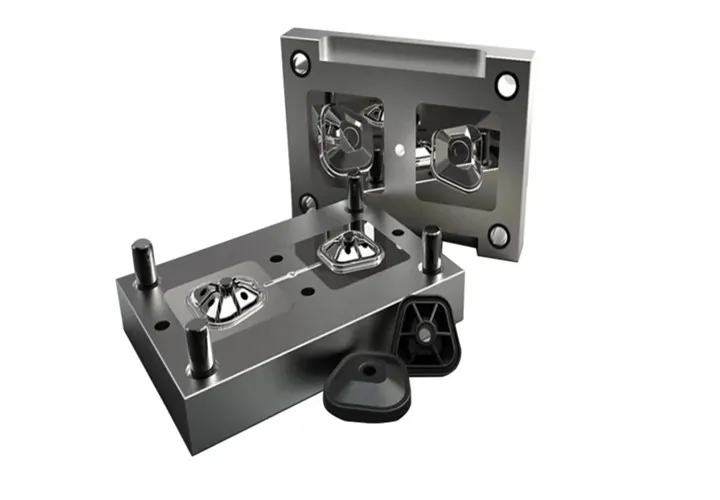
The melting point of PVC (Polyvinyl Chloride) is a key factor that directly influences the success of the injection molding process. This temperature threshold determines how the material behaves when heated and injected into the mold, affecting everything from material flow to the final quality of the product. If the PVC is not heated to the correct temperature, it can result in issues such as poor molding, inconsistent quality, or even damage to the mold. In contrast, heating it too much can degrade the material, affecting its strength and integrity. In this article, we’ll delve into how the melting point of PVC impacts each stage of the injection molding process and explore techniques to optimize molding conditions for efficient, high-quality production.
II. What is the PVC Melting Point
(A) Overview of PVC Melting Point
he melting point of PVC (Polyvinyl Chloride) refers to the temperature at which the solid material transitions into a liquid state, becoming pliable and suitable for molding. PVC is a thermoplastic, meaning it softens when heated and hardens as it cools. The specific melting point of PVC generally ranges between 100°C to 260°C (212°F to 500°F), depending on the type of PVC used—rigid or flexible, and the presence of additives or plasticizers.
Unlike other thermoplastics, PVC does not have a sharp melting point. Instead, it gradually softens over a range of temperatures, making it crucial to carefully control heating during the injection molding process to avoid over-heating or under-heating the material.
(B) Why PVC Melting Point Matters in Injection Molding
The PVC melting point is vital for achieving a successful injection molding process. If the material is heated to a temperature that’s too low, it may not flow properly into the mold, leading to incomplete fills or poor surface finishes. Conversely, if it’s overheated, the PVC can degrade, causing issues like discoloration, reduced mechanical properties, or material burning. By controlling the melting point accurately, manufacturers can ensure smooth, efficient material flow, precise mold filling, and high-quality finished products.

III. How PVC Melting Point Influences Injection Molding Outcomes
(A) Impact on the Injection Molding Process
The melting point of PVC significantly influences several critical aspects of the injection molding process. Understanding these effects is essential for achieving optimal product quality and manufacturing efficiency.
1. Molding Temperature Control
Precise temperature control is crucial for ensuring the PVC reaches its ideal melting point. If the material is underheated, it will not flow properly into the mold, leading to incomplete fills or uneven distribution. Overheating, on the other hand, can cause degradation and loss of material properties. Maintaining an optimal molding temperature allows for consistent material behavior and high-quality output.
2. Cycle Time Efficiency
The PVC melting point impacts how quickly the material melts and flows into the mold. If the material melts too slowly, it increases the overall cycle time, slowing down production. Conversely, if it melts too quickly, it can lead to issues such as premature solidification or material degradation. A balanced melting point ensures efficient cycle times, improving productivity.
3. Mold Quality and Surface Finish
The way PVC behaves when injected into the mold is directly related to its melting point. If the material is not heated properly, it can result in poor mold filling, leading to defects like surface blemishes, air pockets, or incomplete details. Proper melting point control helps achieve a smooth surface finish and sharp mold definition.
4. Injection Pressure and Flowability
PVC’s melting point also affects its viscosity, which in turn influences the required injection pressure. When PVC reaches its optimal melting point, it becomes more fluid and easier to inject, reducing the pressure needed and improving flowability. Incorrect temperature control can result in too high or too low pressure, affecting the injection process and potentially damaging the mold.
5. Risk of Overheating and Degradation
Excessive heat during the injection molding process can degrade PVC, causing chemical breakdowns, discoloration, and loss of material integrity. Overheating can also release toxic fumes, compromising both product quality and safety. Strict temperature monitoring is essential to avoid degradation and ensure the material maintains its desired properties.
6. Cooling Time and Warping
Once injected into the mold, the cooling time of PVC depends on how well it was melted. A material that was overheated may cool unevenly, leading to warping or distortion of the final product. By accurately controlling the melting point, manufacturers can reduce the risk of post-molding defects like warping, ensuring that the finished part maintains its shape and dimensions.
(B) Common Issues Caused by Incorrect PVC Melting Point in Injection Molding
When PVC is not heated to the correct melting point during the injection molding process, several problems can arise. These issues can compromise product quality, increase costs, and reduce production efficiency. Here’s a breakdown of the common issues and how to avoid them:
1. Short Shots
Cause: A short shot occurs when the mold cavity is not completely filled due to insufficient material flow, often caused by underheating the PVC. If the PVC isn’t melted to the proper temperature, it becomes too viscous and struggles to flow into the mold.
How to Avoid: Ensure that the PVC reaches its optimal melting point, and maintain proper mold temperature to guarantee smooth flow and complete mold filling.
2. Warping and Dimensional Inaccuracies
Cause: If PVC is overheated or unevenly heated, it can cool at different rates, leading to warping or dimensional inaccuracies. Improper control of the cooling phase can also cause the material to shrink unevenly, affecting the part’s shape.
How to Avoid: Carefully control the heating and cooling rates to ensure uniform solidification. Also, monitor the molding temperature closely to avoid excessive heat that may cause warping.
3. Burn Marks or Overheating
Cause: Overheating PVC can result in burn marks, discoloration, or degradation of the material. This happens when the PVC exceeds its optimal melting point, causing chemical breakdowns and burning during the injection process.
How to Avoid: Keep the molding temperature within the recommended range for the specific type of PVC used. Utilize temperature sensors and controllers to monitor and maintain precise heating conditions.
4. Flow Lines and Surface Imperfections
Cause: If the PVC does not reach a consistent melting point, it may flow unevenly into the mold, leading to visible flow lines or surface imperfections. This often happens when the material is too cold or too hot, affecting how smoothly it fills the mold.
How to Avoid: Control the material’s temperature to ensure it flows uniformly into the mold. Using proper injection speeds and pressures can also help prevent flow lines and surface defects.
5. Sink Marks
Cause: Sink marks appear as depressions or dimples on the surface of the molded part and are caused by uneven cooling or insufficient material volume in thicker sections of the mold. If the PVC is not melted and injected properly, these issues become more pronounced.
How to Avoid: Adjust the material’s temperature and cooling time, ensuring uniform filling and even cooling. Additionally, consider optimizing mold design to reduce thicker sections that are more prone to sink marks.
6. Poor Mold Filling and Surface Finish Issues
Cause: Incorrect melting temperatures can lead to incomplete mold filling, which results in poor surface finishes, incomplete features, or rough textures on the molded part.
How to Avoid: Monitor the melting point closely and use controlled, consistent temperatures during both the heating and injection phases. Ensure proper injection speed and pressure to facilitate better mold filling.

(C) Key Applications of PVC in Various Industries
PVC is one of the most versatile and widely used plastics across numerous industries due to its unique properties like durability, chemical resistance, and cost-effectiveness. Below are some of the key applications of PVC that highlight its widespread use in modern manufacturing.
1. Medical Applications
In the medical field, PVC is used in a variety of applications, including medical tubing, blood bags, IV containers, and surgical instruments. Its biocompatibility, flexibility, and ability to be sterilized make it ideal for products that require both safety and precision.
2. Automotive Industry
PVC is also employed in the automotive sector for a range of components like dashboard panels, door trims, and interior accessories. Its ability to be molded into various shapes and its durability make it a practical choice for both functional and aesthetic automotive parts.
3. Consumer Goods
PVC’s versatility extends to consumer goods such as credit cards, toys, packaging materials, and footwear. Its adaptability allows manufacturers to produce a wide array of products with varying levels of rigidity and flexibility, depending on the need.
4. Electrical Insulation
PVC’s excellent electrical insulating properties make it a popular material for wires and cables. It is used as a protective covering for electrical wires due to its ability to resist electrical currents and its flame-retardant characteristics.
IV. PVC vs. Other Plastics: A Comparison of Melting Points
The melting point of a plastic plays a crucial role in its processing and application. Below is a comparison of PVC’s melting point with other commonly used plastics, highlighting how each material’s thermal properties impact its use in different industries.
| Plastic Type | Melting Point Range | Properties | Common Applications |
| PVC (Polyvinyl Chloride) | 100°C to 260°C (212°F to 500°F) | Versatile, durable, corrosion-resistant, and can be rigid or flexible depending on additives. | Pipes, window profiles, flooring, medical devices, electrical insulation. |
| PE (Polyethylene) | 120°C to 180°C (248°F to 356°F) | Lightweight, flexible, and resistant to chemicals, making it suitable for low-pressure applications. | Packaging, plastic bags, toys, medical tubing. |
| PP (Polypropylene) | 160°C to 170°C (320°F to 338°F) | Strong, heat-resistant, and durable, often used for items requiring rigidity and chemical resistance. | Automotive parts, containers, textiles, medical equipment. |
| PC (Polycarbonate) | 230°C to 260°C (446°F to 500°F) | Transparent, strong, and heat-resistant. Often used where clarity and strength are critical. | Eyewear lenses, medical devices, optical discs. |
| ABS (Acrylonitrile Butadiene Styrene) | 210°C to 250°C (410°F to 482°F) | Tough, impact-resistant, and easy to process, making it ideal for applications that need both rigidity and impact resistance. | Automotive parts, consumer electronics, toys. |
| Nylon (Polyamide) | 190°C to 350°C (374°F to 662°F) | Strong, flexible, and resistant to wear and abrasion. Great for high-strength applications. | Textiles, gears, automotive components, electrical insulation. |
| PET (Polyethylene Terephthalate) | 250°C to 260°C (482°F to 500°F) | Strong, durable, and has excellent dimensional stability. Often used for products requiring transparency and strength. | Bottles, containers, textiles, films. |
Key Differences:
- PVC has a lower melting point range compared to materials like PC, Nylon, or PET, which allows for easier processing in certain molding applications.
- PE and PP have relatively low melting points, making them suitable for processes that require lower temperature thresholds.
- Nylon, while having a high melting point, offers superior strength and abrasion resistance, ideal for more demanding applications.
- ABS provides a good balance of toughness and ease of molding, often used for consumer products and automotive parts.

V. How to Optimize the Process with ACO Mold
Optimizing the injection molding process is key to achieving high-quality results, and ACO Mold offers advanced solutions to enhance efficiency and reduce waste.
Precision temperature control: ACO Mold uses precise temperature control systems to ensure PVC reaches its ideal melting point, reducing defects like short shots and warping while ensuring consistent quality.
Custom mold design: ACO Mold provides custom mold designs tailored to each project’s needs, improving efficiency and reducing material waste, while ensuring high-quality outputs.
Real-time monitoring and quality control: With real-time monitoring, ACO Mold tracks temperature, pressure, and injection speed throughout the process, allowing for quick adjustments and minimizing defects.
VI. Conclusion
Perfecting the PVC melting point is the secret to unlocking flawless injection molding and exceptional product quality. With precise temperature control, you can ensure smooth material flow, eliminate defects like warping and short shots, and achieve consistent, high-performance results. ACO Mold takes this process to the next level, offering cutting-edge solutions like custom mold designs, real-time monitoring, and precision temperature control. By partnering with ACO Mold, you’ll not only optimize efficiency but also create top-tier parts, time after time. Ready to elevate your PVC injection molding? Let ACO Mold lead the way to better, faster, and more reliable outcomes.