Phenolics are only a fraction of the cost of suitable thermoplastics, so moving away from them really depends on the requirements of your application. LCP’s (liquid crystal polymers) are widely used where dimensional stability and high thermal resistance are required, but are expensive and take some effort to process well. PPS is very good, as is PEI which may be easier to process, though PEI will not have the same thermal resistance and dimensional stability as PPS. In fact, none of the thermoplastics except LCP’s really compete with phenolics for dimensional stability without being glass filled. Unless you get something from the switch, for example more precise dimensional control or higher throughput, that translates into a premium on the market, it’s a questionable move. First figure out exactly what will justify a premium in price, then there are lots of resources to help you find the thermoplastic that provides it.
It is not always necessary to go to the more expensive engineering polymers. PC/ABS + flame retardant are also commonly used for electrical appliances because of their flame retardant behavior. It all depends on the design intent of the parts you want to replace.
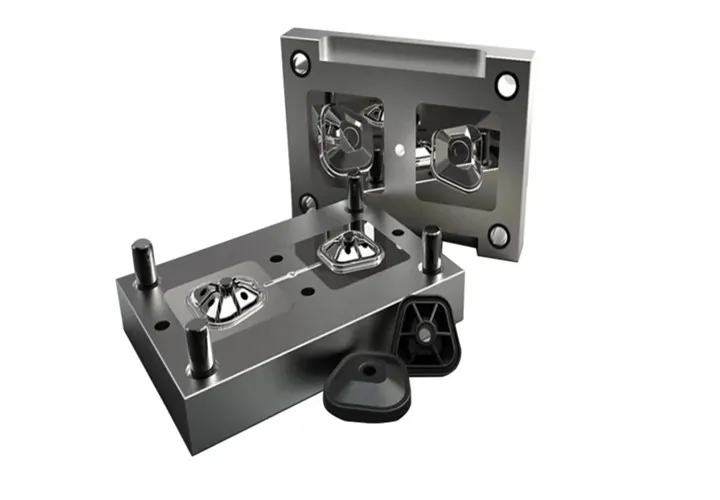
As for the quantities. 1000-10.000 units/ year might not be enough to justify investing in an injection molding tool. Depending on the complexity of the parts (e.g. undercuts with slides…) your mold can get rather expensive. While the finished products might not necessarily have better properties than your current one.
As a guideline I would not invest in hard injection molding tools if the part quantities are below 10,000 a year. Between 5,000 and 10,000 we sometimes stick with an aluminum mold that we design ourselves, and build ourselves. Where we just outsource the milling. If you study mold design a bit, this is doable + gives you a tremendous amount of knowledge for future injection molded parts that need to be designed.
I have experience in the injection molding of Phenolics and many of the high temperature thermoplastics such as LCP, PPS, PCT, PEI, PPA. The overriding factor for moving away from Phenolics is a shrinking base of experienced molders. The high temperature engineering resins require the same attention as phenolics to handle the high temperatures. Glass filled is the norm so pay attention to screw & barrel composition. Flame retardants create their own issues with mold venting. High mold temperatures are still required, plus the barrel temperatures are much higher. Make sure the processing and tooling staff are experienced in the resin you decide on.