Updated on November 13, 2024
The fees for a set of plastic molds may cost thousands or even hundreds of thousands of dollars. What if the products have many styles but with a small quantity? Is it alright to go for 3D printing directly? Let’s take a look at the differences between plastic injection molding and 3D printing.
I. Overview
In the current backdrop of continuous development and innovation in the manufacturing industry, plastic injection molding and 3D printing molding, as significant technical approaches in the field of plastic processing, each play a crucial role in different application scenarios with their unique characteristics. A thorough analysis of the differences between these two molding techniques is of paramount significance for manufacturers to make informed decisions in actual production to achieve efficient, high-quality, and economically feasible production processes.
II. Definitions
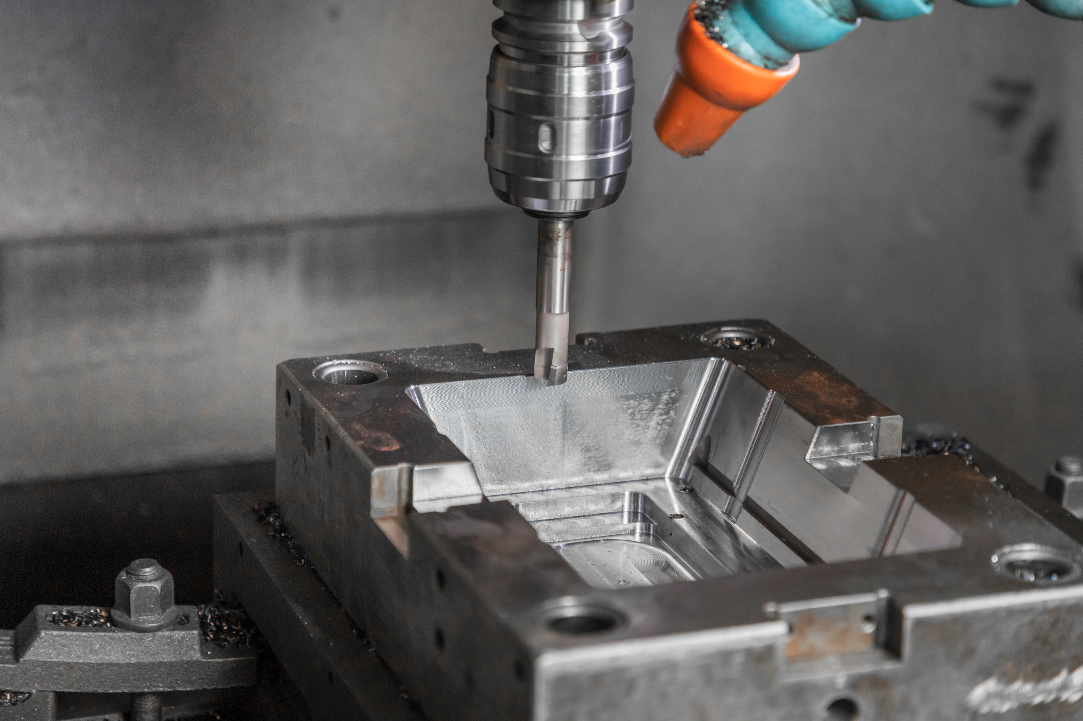
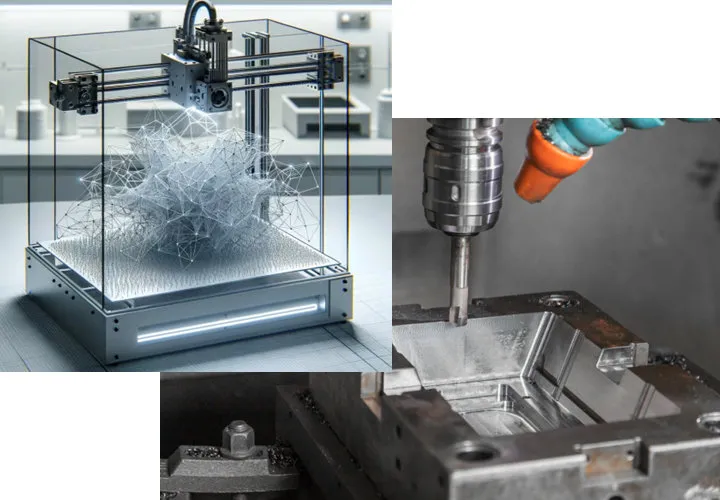
Plastic injection molding is a traditional and widely used manufacturing process. It precisely injects the heated and molten plastic material under high pressure into a meticulously designed and fabricated mold cavity. After the plastic cools and solidifies, it is demolded from the mold to obtain a molded product with a specific shape and size.
3D printing molding is an additive manufacturing technology based on digital models. It builds the desired object shape layer by layer according to a pre-set digital blueprint.

III. Consideration Factors
When faced with the decision of choosing plastic injection molding or 3D printing molding, several key factors need to be carefully weighed and considered.
1.Cost
• Plastic injection molding requires a significant investment in the mold development stage, and the cost of mold fabrication can be as high as several thousand or even tens of thousands dollars. However, once the mold is completed and enters the large-scale mass production stage, the cost per unit of the product is significantly reduced due to the amortization of the mold cost. Usually, its cost advantage can be fully reflected when the production scale is more than several thousand pieces.
• The initial equipment investment for 3D printing molding is relatively small, usually ranging from several hundred to several thousand dollars, depending on the selected equipment type and performance.Although 3D printing may help save mold costs a lot, it is not workable at all when you have to put the order into mass production. However, in batch production, due to the limitations of material utilization and production efficiency, the cost per unit of the product is often high, making it more suitable for small-batch or single-piece customized production.
2.Production Batch
• The characteristics of plastic injection molding make it highly suitable for large-scale mass production. Its efficient production process and low cost per unit product enable it to maximize economic benefits in production scales of several thousand or even tens of thousands of pieces.
• 3D printing molding has unique advantages in small-batch production or single-piece customization. It can quickly respond to small-quantity production demands without incurring high mold development costs.
3.Precision and Surface Quality
• Plastic injection molding, with its mature process and stable mold structure, can usually achieve high precision. The part tolerance can be controlled within ±0.05mm to ±0.1mm, and it can achieve excellent surface finish, such as Ra 0.8 – Ra 1.6, making the product appearance exquisite and smooth.
• 3D printing molding is relatively weak in terms of precision and surface quality due to its layer-by-layer manufacturing method. The part tolerance is generally within ±0.1mm to ±0.3mm, and the surface finish is usually Ra 3.2 – Ra 6.3, and fine layer lines may occur.
4.Design Complexity
• Plastic injection molding is relatively traditional in design. For complex structures, it may require the combination of multiple parts to achieve.
• 3D printing molding can almost achieve any complex internal and external structure. Whether it is an extremely fine hollow design or a unique topological optimization structure, it can be easily handled, providing a great space for innovative design.
5.Structural Strength
• The products of plastic injection molding have high structural strength due to the uniform filling and tight bonding of the plastic material in the mold, which can approach the strength index of the material itself. Therefore, it performs well in applications with high requirements for strength and durability.
• The product strength of 3D printing molding is relatively low, about 70% – 90% of that of injection molding, and may not be as reliable as injection molding products when subjected to large external forces or impacts.
6.Delivery Time
• Injection molding usually takes several weeks in the mold fabrication stage, and once the mold is completed, the delivery time for batch production products is usually 1 – 2 weeks, depending on the production plan and order quantity.
• The delivery time of 3D printing molding is relatively short, usually ranging from several hours to several days, depending on the size and complexity of the part and the 3D printing technology used.
7.Material Selection
• Injection molding can select from a rich variety of plastic materials, including dozens of commonly used engineering plastics and special plastics, to meet the needs of different performance and application scenarios.
• The materials currently available for 3D printing molding are relatively limited, usually several to a dozen commonly used plastic materials.
8.Part Size
• Injection molding can produce large-sized parts, and the length can even reach several meters, suitable for the manufacturing of large plastic products.
• 3D printing molding is limited by the working space of the equipment and is usually more suitable for producing parts ranging from several tens of centimeters to about one meter.
9.Design Maturity
• Injection molding requires a high degree of design maturity and needs to undergo thorough design and verification to ensure the smooth progress of mold fabrication and product production.
• 3D printing molding allows for attempts and modifications at the less mature stage of the design, providing greater flexibility for design optimization.

IV. Comparison Table
Please note that these numerical ranges in the table are only rough references. The actual situation may vary depending on the specific processes, equipment and materials.
| Factor | Plastic Injection Molding | 3D Printing Molding |
| Delivery Time | Several weeks for mold fabrication, 1 – 2 weeks for batch production | Several hours to several days, depending on part size and complexity |
| Cost | Several thousand to tens of thousands dollars for mold fabrication | Hundreds of dollars or more, depending on equipment type |
| Quantity | Cost advantages are reflected when producing several thousand or more pieces | Several to several hundred pieces |
| Material | Dozens of common engineering and special plastics | Several to a dozen common plastics |
| Part Size | Can produce large parts with a length of several meters | Usually several tens of centimeters to about one meter |
| Part Tolerance | ±0.05mm to ±0.1mm | ±0.1mm to ±0.3mm |
| Part Strength | High, close to the material’s inherent strength | Relatively low, about 70% – 90% of injection molding |
| Design Maturity | Requires thorough design and verification | Allows attempts and modifications when the design is less mature |
| Design Complexity | Relatively simple; complex structures may require multiple part combinations | Can achieve almost any complex internal and external structure |
| Surface Finish | Ra 0.8 – Ra 1.6 | Ra 3.2 – Ra 6.3 |
V. Conclusion
Injection molding and 3D printing each have their unique advantages and application scopes. Injection molding excels in large-scale mass production, high precision, high surface quality, and high strength requirements; while 3D printing molding has irreplaceable advantages in small-batch, complex design, rapid prototyping, and design flexibility. In practical applications, the appropriate molding technology should be selected flexibly based on specific production requirements, cost budgets, delivery time requirements, and product performance indicators, or a combination of the two should be ingeniously utilized to achieve the best production effect and economic benefits.
In summary, a full understanding of the characteristics and application scenarios of injection molding and 3D printing molding can help manufacturers make the best choice under different production requirements, thereby improving production efficiency, reducing costs, and enhancing product quality and market competitiveness.
VI. Thoughts and Answers
- Q:If 1000 plastic products with a simple structure but high precision requirements are to be produced, which molding method should be chosen?
A: Injection molding. Due to the large production quantity, injection molding can ensure high precision and low unit cost.
- Q:Which molding method is more suitable for manufacturing parts with complex internal hollow structures?
A: 3D printing molding. It can easily achieve complex internal structures without considering mold limitations.
- Q:When a product prototype is needed in a short time for design evaluation, which method is more appropriate?
A: 3D printing molding. It can be realized quickly and shorten the product development cycle.
- Q:To produce plastic parts with a beautiful appearance, smooth surface, and high strength requirements, which method is better?
A: Injection molding. It can provide good surface finish and high strength.

If you still have questions about the differences between the injection molding and 3D printing molding or are unsure how to make a choice, you can consult ACO Mold. They are committed to providing customers with high-quality, efficient and cost-effective services to ensure that you have a smooth journey in the field of plastic injection molding and achieve the best production effect and economic benefits. As a professional injection mold manufacturer, ACO Mold will surely be able to assist you.