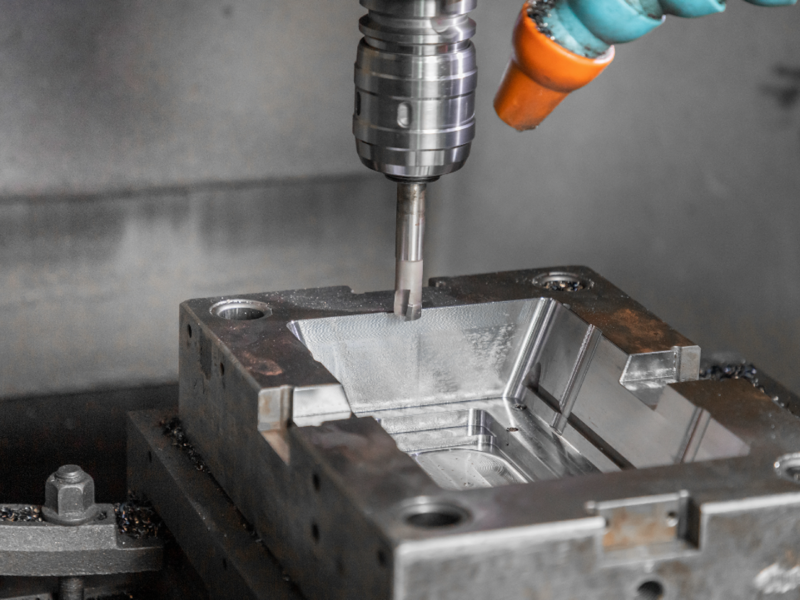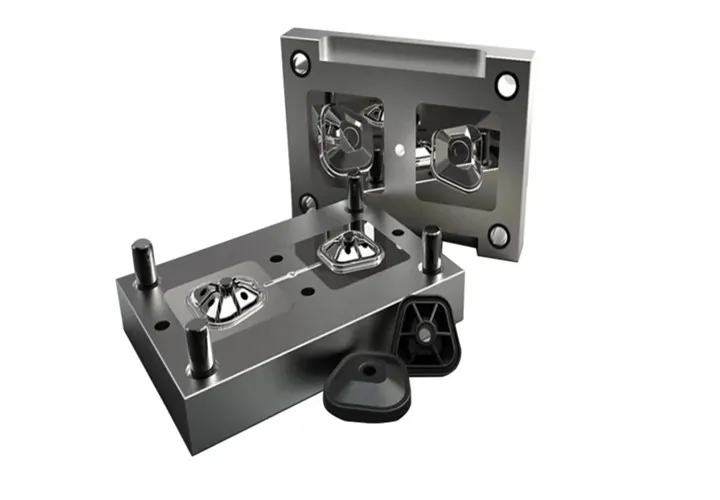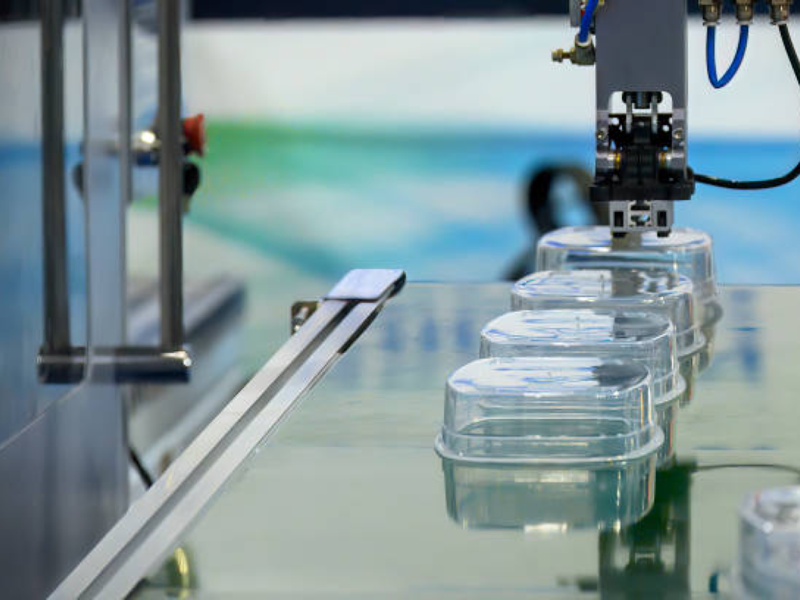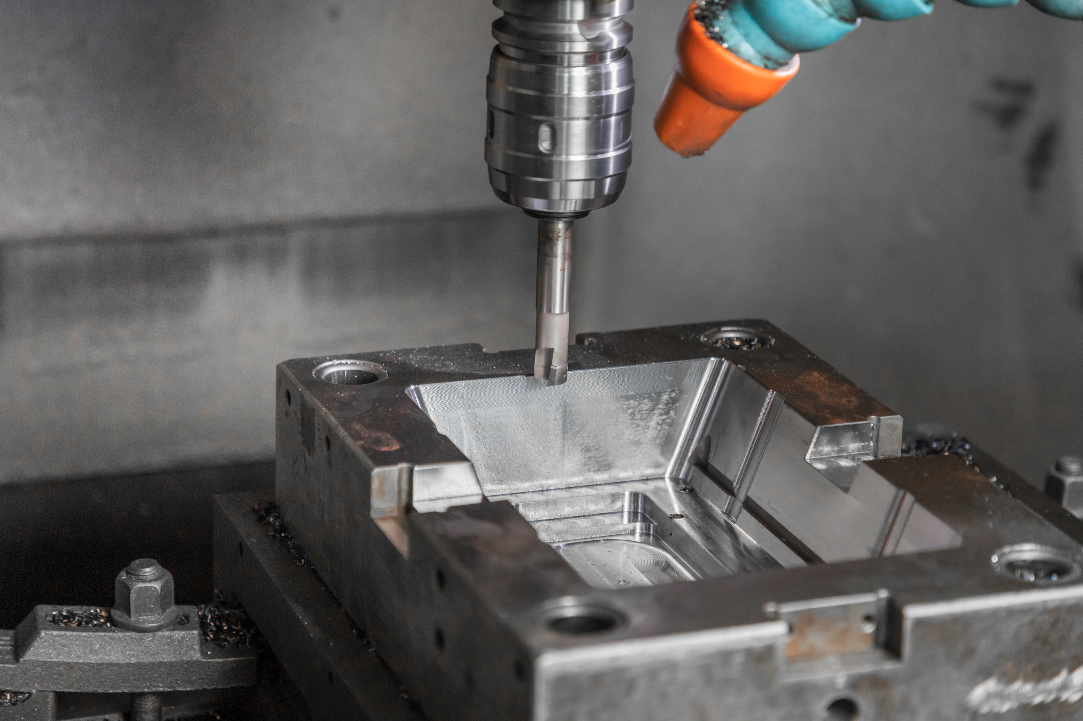
Abstract: This article conducts a comprehensive and in-depth exploration of the analysis and selection strategies for injection mold steels. It systematically elaborates on multiple aspects, including material performance classification, thermodynamic property comparison, processing performance matrix, economic analysis, application scenario adaptation, cutting-edge technology development, and material selection decision tree, aiming to provide detailed guidance and reference for the rational selection of injection mold steels.
In the design of injection molds, the choice of mold steel directly affects mold lifespan, processing cost, product quality, and production efficiency. The following is a systematic analysis of the commonly used steel types and their characteristics in injection molds from multiple dimensions:
I. Injection Mold Steels Classification by Material Performance
1.Pre-hardened Steel
- Representative grades: P20 (1.2311/1.2312), 718 (1.2738)
- Characteristics: Factory hardness of 30 – 40HRC, ready for processing without heat treatment
- Applications: Small and medium-sized molds, rapid delivery projects
- Advantages: Saves time and cost of heat treatment
- Limitations: Not suitable for high-precision or super-large molds
- Actual case: An injection mold for a small electronic product casing adopted P20 steel. Due to the absence of heat treatment requirements, the mold manufacturing cycle was shortened, successfully meeting the rapid market launch demand of the product.
2.Corrosion-Resistant Steel
- Representative grades: S136 (1.2083), 420 (1.2085)
- Chemical characteristics: High chromium content (13 – 16%)
- Application scenarios:
- Processing of corrosive plastics such as PVC and POM
- Medical devices and other products with high cleanliness requirements
- Special advantages: Mirror polishing can reach above #15000 mesh
- Actual case: A medical device manufacturer selected S136 steel when manufacturing injection molds for the production of disposable syringes, ensuring that the mold could maintain good surface quality and dimensional accuracy even after long-term contact with corrosive materials.
3.High-Wear Resistance Steel
- Representative grades: H13 (1.2344), D2 (1.2379)
- Strengthening mechanism: Enhanced wear resistance through molybdenum/vanadium carbides
- Applicable working conditions: Glass fiber reinforced plastics (30% + glass fiber content)
- Hardness after heat treatment: Can reach 52 – 56HRC
- Actual case: A certain automotive component manufacturer used H13 steel when producing injection molds for custom plastic parts containing a large amount of glass fibers, effectively resisting the wear of the mold by the glass fibers and significantly extending the mold’s service life.
4.Precipitation Hardening Steel
- Representative grades: NAK80 (Daido, Japan), PD613 (Hitachi)
- Characteristics:
- Pre-hardened state 38 – 42HRC
- Can age-harden to 43 – 45HRC after processing
- Advantages: Balances processability and final hardness
- Actual case: In the manufacturing of an injection mold for a precision optical component, NAK80 steel was adopted, which not only met the convenience of initial processing but also achieved the required hardness and precision through age hardening.
II. Injection Mold Steels Thermodynamic Property Comparison
| Material | Thermal Conductivity (W/m·K) | Thermal Expansion Coefficient (10^-6/℃) | Thermal Fatigue Resistance |
|---|---|---|---|
| H13 | 24.3 | 11.5 | ★★★★☆ |
| P20 | 29.5 | 12.8 | ★★★☆☆ |
| S136 | 20.1 | 10.4 | ★★★★☆ |
Note: The surface crack propagation rate when the number of thermal cycles reaches 10^5 times is used as the evaluation standard
Technical difficulty analysis: In practical applications, different injection molding processes and mold structures impose different requirements on the thermodynamic properties of the material. For example, for high-speed injection molding or thin-wall injection molding, the requirement for thermal conductivity may be higher, while for molds operating at high temperatures for long periods, thermal fatigue resistance becomes a key factor. Therefore, when selecting steel, it is necessary to fully consider the specific process conditions and mold usage environment to avoid mold failure due to mismatched thermodynamic properties.
III. Injection Mold Steels Processing Performance Matrix
- Machinability
- Easily machinable: NAK80 (contains sulfur for easy cutting)
- Difficult to machine: Hardened S7 (requires the use of CBN tools)
- Polishing Performance
- Mirror grade: S136, ELMAX (can reach Ra0.008μm)
- Fine texture: NAK80 (can etch fine grain patterns)
- Weld Repairability
- High weldability: P20 (requires preheating to 300°C)
- Low weldability: Hardened D2 (requires special welding materials)
Chart presentation: The following is a graphical representation of the processing performance matrix for a clearer and more intuitive comparison of the performance of different steels.
| Performance | Steel type | Specific performance |
|---|---|---|
| Machinability | NAK80 | Easily machinable |
| Machinability | Hardened S7 | Difficult to machine |
| Polishing Performance | S136, ELMAX | Mirror grade |
| Polishing Performance | NAK80 | Fine texture |
| Weld Repairability | P20 | High weldability |
| Weld Repairability | Hardened D2 | Low weldability |
IV. Economic Analysis
- Full Life Cycle Cost Model
- Initial cost: Domestic P20 ≈ 60% of imported 718
- Maintenance cost: S136 molds require 30% fewer maintenance times than P20
- Mass production amortization: High-alloy steels are preferred for more than one million mold shots
- Mold Steel Cost Gradient(Based on the price ratio per unit weight)
- Economic grade: 3Cr2Mo (P20) → 1.0x
- Mid-range grade: 718 → 1.5x
- High-end grade: S136 → 2.8x
- Special grade: CALMAX → 4.2x
Market dynamics: In recent years, with the technological upgrade of the domestic steel industry, the performance of domestic mold steels has gradually approached that of imported products, while the price advantage remains obvious. However, in some high-end application fields, imported mold steels still occupy a certain market share, mainly due to their advantages in stability and special properties. In the future, with the intensification of market competition and continuous technological progress, the price gradient of injection mold steels may change. At the same time, users’ pursuit of cost performance will also prompt manufacturers to continuously optimize products and pricing strategies.

V. Application Scenario Adaptation
- Transparent products
- Must-select: S136, STAVAX ESR (electroslag remelted steel)
- Key indicators: Control of non-metallic inclusions (ASTM E45 ≤ 0.5 grade)
- Micro-precision parts
- Preferred: SUS420J2 (hardness 48HRC)
- Supporting technology: Vacuum heat treatment + cryogenic treatment
- Automotive structural parts
- Recommended solution: Use 1.2344 (H13) for the mold core
- Use 1.1730 (low-carbon steel) for the mold base
VI. Frontier Technology Development of Injection Mold Steels
- New Material Systems
- Powder metallurgy steel: ASP-23 (high homogeneity)
- Gradient materials: Surface wear-resistant layer + core ductile matrix
Implementation difficulties and challenges: The production process of powder metallurgy steel is complex and costly, and the quality stability in large-scale production still needs to be further improved. The preparation of gradient materials requires precise process control to ensure good performance in the transition area between the surface wear-resistant layer and the core ductile matrix, avoiding problems such as delamination or sudden changes in performance.
- Surface Treatment Synergy
- DLC coating: The friction coefficient can be reduced to 0.1
- Laser cladding: Local repair hardness can reach 60HRC
- Digital Material Selection
- Stress distribution based on CAE simulation to guide material selection
- Big data-driven failure mode matching
VII. Material of Injection Mold Steels Selection Decision Tree
- Determine the type of plastic → Is it corrosive?
- Analyze product requirements → Is a mirror surface required?
- Estimate production volume → < 100,000 mold shots or > 1 million?
- Assess complexity → Is an easily machinable material required?
- Budget constraints → Can the premium of imported materials be accepted?
Note: The actual material selection needs to comprehensively consider factors such as mold design, injection molding process parameters, and post-processing capabilities. It is recommended to use the QFD (Quality Function Deployment) method for systematic trade-offs. But for key automotive component molds, it is recommended to adopt a modular design, using differentiated steel combinations for different components.
Risk Warning: During the material selection decision-making process, there may be risks such as inaccurate understanding of product requirements, incomplete evaluation of steel properties, or untimely grasp of market supply, leading to material selection errors. Therefore, to reduce risks, a multi-departmental collaborative material selection evaluation mechanism should be established, relevant information should be fully collected and analyzed, and a certain margin for adjustment should be reserved.
VIII. Conclusion
To sum up, the selection of injection mold steels is a comprehensive consideration process that requires a full balance of various factors. In practical applications, however, based on specific needs and conditions, the methods and strategies introduced in this article should be flexibly applied to make wise choices. ACO Mold has accumulated rich experience in the selection of mold steels during long-term practice and is constantly exploring and applying new technologies and methods, committed to providing customers with higher-quality, more economical, and more reliable injection mold solutions.